
E00838
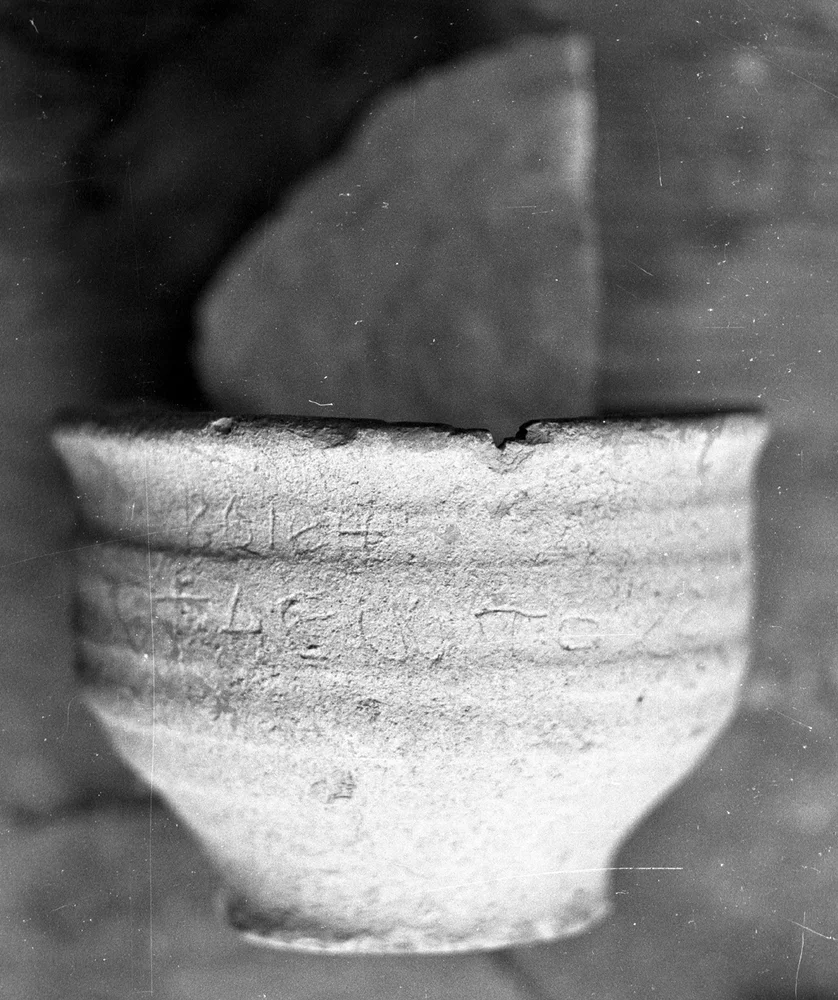
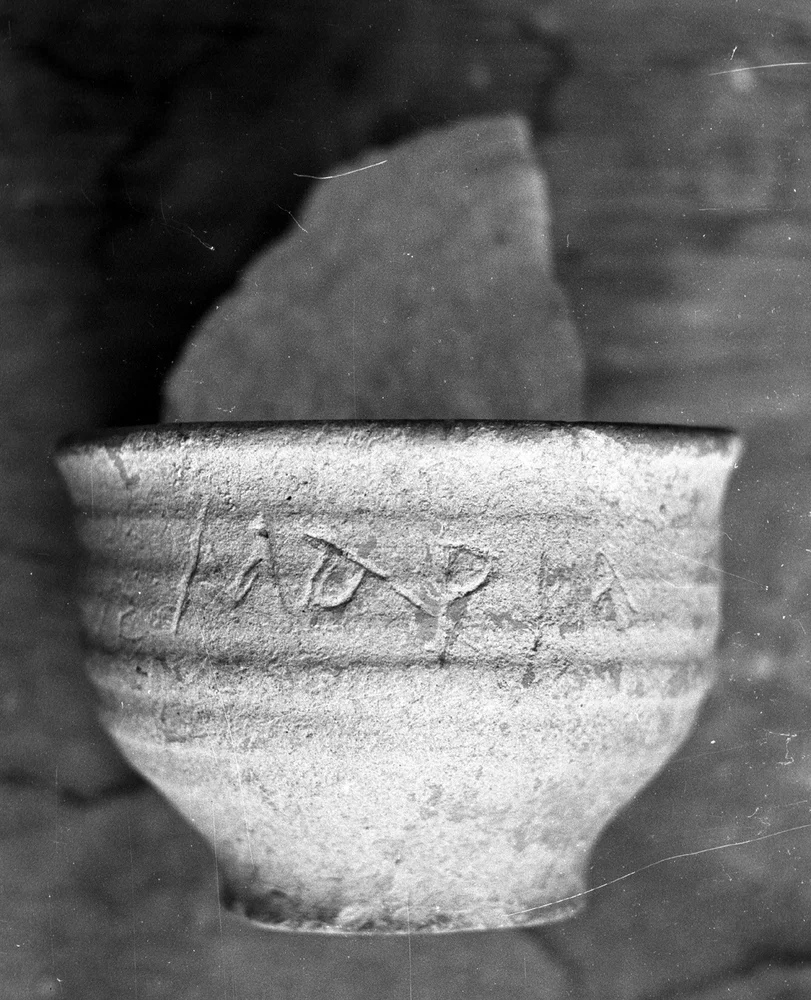
Greek inscription on a small clay pot with an invocation of *Mary (Mother of Christ, S00033). Found in Aphrodisias (Caria, western Asia Minor). Probably late antique (5th c. or later).
- Language
- Greek
- Date from
- 431
- Date to
- 1300
- Evidence type
- Images and objects; Inscriptions
- Evidence subtype
- Inscribed objects; Other portable objects (metalwork, ivory, etc.)
- Evidence region
- Asia Minor
- Evidence location
- Aphrodisias; Nicomedia, Νικομήδεια, Nikomēdeia, Izmit, Πραίνετος, Prainetos, Nicomedia
- Cult region
- Asia Minor
- Cult location
- Aphrodisias; Nicomedia, Νικομήδεια, Nikomēdeia, Izmit, Πραίνετος, Prainetos, Nicomedia
- Cult date from
- 431
- Cult date to
- 1300
Text
On a small clay pot:
βοΐθη
+ Θεωτόκε Μαρία
[1. βοΐθη = βοήθει || 2. Θεωτόκε = Θεοτόκε || 3. Μαρία or Μαρίᾳ]
'Help, + Mary the Theotokos!' or 'The Theotokos, help Maria!'
Text: IAph2007 15.353.
Interpretation and translation: Ch. Roueché.
Source
Small clay pot found in Aphrodisias (Caria, west Asia Minor), with no good context. H. 7 cm; diameter 10.5 cm.
Discussion
The pot bears an invocation of *Mary (the Mother of Jesus). She is called the Theotokos. Charlotte Roueché stresses that this is the only invocation of the Theotokos found at the site (see ala2004, ch. VIII.22).
The name Maria may be understood as the name of the supplicant (dative) or as the name of the addressee (nominative).
Bibliography
Edition:
IAph2007 15.353. http://insaph.kcl.ac.uk/iaph2007/iAph150353.html
Roueché, Ch. (ed.), Aphrodisias in Late Antiquity. The Late Roman and Byzantine Inscriptions including Texts from the Excavations at Aphrodisias conducted by Kenan T. Erim (Journal of Roman Studies Monograph 5, London: Society for the Promotion of Roman Studies, 1989), no. 146.
Further Reading:
Roueché, Ch., Aphrodisias in Late Antiquity,electronic second edition (London, 2004), ch. VIII.22. http://insaph.kcl.ac.uk/ala2004/narrative/sec-VIII.html
Images
Associated saints
| Saint | Name in source | Certainty |
|---|---|---|
| Mary, Mother of Christ (S00033) | Θεωτόκος, perhaps also Μαρία | Certain |
Cult classifications
- Cult Related Objects
- Other
- Non Liturgical Activity
- Prayer/supplication/invocation
- People
- Women
Record author
Pawel Nowakowski
Entry date
04/11/2015
Citation
Pawel Nowakowski, Cult of Saints, E00838 — https://csla.history.ox.ac.uk/record.php?recid=E00838