
E01036
Inscribed stone reliquary with relics of *Zechariah (probably the father of John the Baptist, S00597). Found near Seleukeia/Seleucia ad Calycadnum (Isauria, southern Asia Minor). Probably 5th/6th c.
- Language
- Greek
- Date from
- 400
- Date to
- 600
- Evidence type
- Archaeological and architectural; Inscriptions
- Evidence subtype
- Extant reliquaries and related fixtures; Inscribed objects
- Evidence region
- Asia Minor
- Evidence location
- Seleucia ad Calycadnum; Nicomedia, Νικομήδεια, Nikomēdeia, Izmit, Πραίνετος, Prainetos, Nicomedia
- Cult region
- Asia Minor
- Cult location
- Seleucia ad Calycadnum; Nicomedia, Νικομήδεια, Nikomēdeia, Izmit, Πραίνετος, Prainetos, Nicomedia
- Cult date from
- 400
- Cult date to
- 600
Text
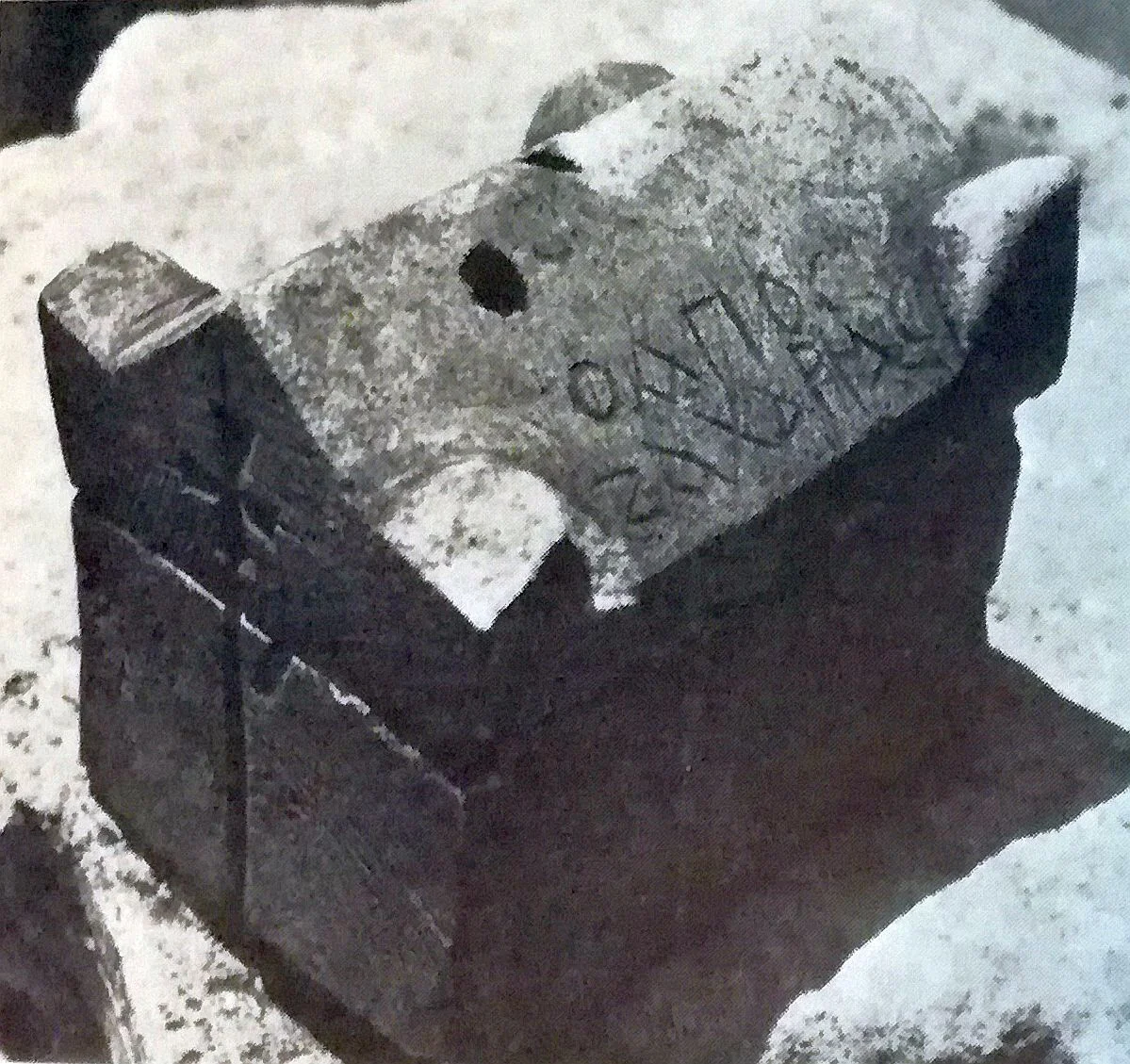
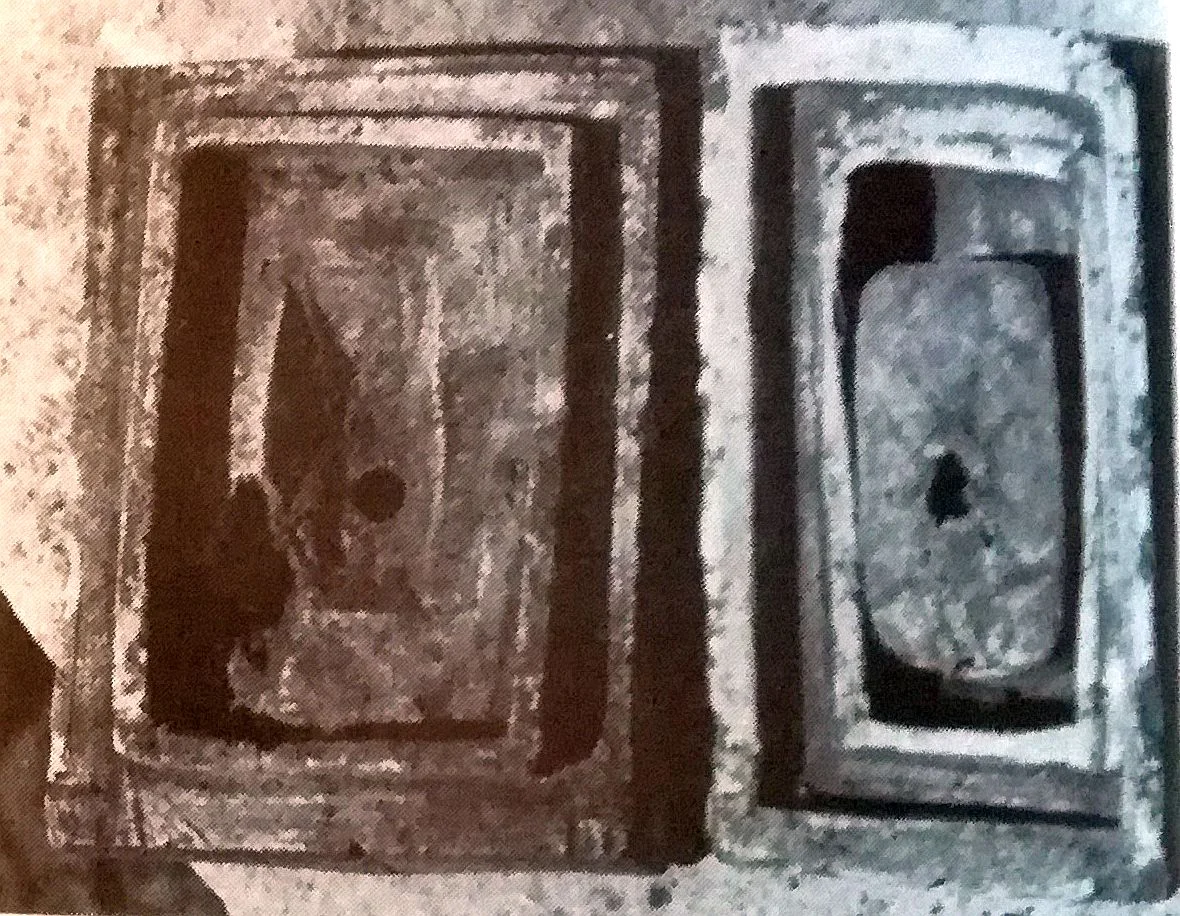
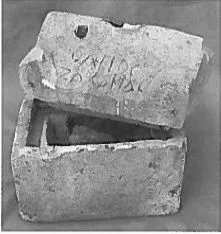
Inscribed stone reliquary, resembling a small sarcophagus. H. 0.135 m; W. 0.15 m; Th. 0.105 m. One of its sides has a hole, presumably for gaining closer contact with the relic. The interior is lined with lead. Fragmentary relics were found inside, enclosed in a small lead box. Gilbert Dagron notes that this kind of reliquary is well attested in Cilicia and Syria. The object was found by the inhabitants of the village Çaltı-Bozkır. Now in the Museum in Silifke. In 2009 re-edited with a good photograph by Ayşe Aydın (which is by mistake tagged editio princeps in the SEG, for earlier editions, see Eyice 1979 and I. Cilicia, no. 9).
The inscription reads:
ὁ ἅγιος
Ζαχαρίας
'Saint Zechariah'
Text: I. Cilicia, no. 9.
Discussion
Although reliquaries of this form are quite common in the region around Syria, they are rarely inscribed. This label is a very simple one, it mentions only the name of the saint, whose relics were kept inside. The Zechariah concerned was probably the father of John the Baptist, identified by an early Christian tradition with an innocent priest murdered at the Temple in Jerusalem (see Matthew 23:35), but could, possibly, be the Old Testament Prophet Zechariah.
Bibliography
Edition:
Aydın, A., "[in Turkish: Märtyrer, Heilige und Reliquienkult im kilikisch-isaurischen Raum]", Olba 17 (2009), 72, 82.
I. Cilicia = Dagron, G., Feissel, D. (eds.), Inscriptions de Cilicie, (Paris: De Boccard, 1987), no. 9.
Hagel, St., Tomaschitz, K., (eds.), Repertorium der westkilikischen Inschriften (Österreichischen Akademie der Wissenschaften. Denkschriften der philosophisch-historischen Klasse 265, Ergänzungsbände zu den Tituli Asiae Minoris 22, Vienna: Verlag der Österreichischen Akademie der Wissenschaften, 1998), no. ÇaB 1.
Tabula Imperii Byzantini 5, s.v. Çaltı(2).
Eyice, S., "Rölik mahfazaları hakkında bir kitap ve bu münasebetle Anadolu'dan bazı Rölik mahfayalar", Istanbul Üniversitesi Edbiyat Fakültesi, Sanat Tarihi Yıllığı 8 (1979), 57-94.
Further reading:
Mietke, G., "Monumentalisierung christilcher Heiliger in Kilikien in frühbyzantinischer Zeit", Olba 17 (2009), 120.
Reference works:
Supplementum Epigraphicum Graecum 37, 1330; 59, 1598.
Images
Associated saints
| Saint | Name in source | Certainty |
|---|---|---|
| Zechariah, father of John the Baptist (S00597) | Ζαχαρίας | Uncertain |
| Zechariah, Old Testament prophet (S00283) | Ζαχαρίας | Uncertain |
Cult classifications
- Relics
- Reliquary – institutionally owned
Record author
Pawel Nowakowski
Entry date
30/12/2015
Citation
Pawel Nowakowski, Cult of Saints, E01036 — https://csla.history.ox.ac.uk/record.php?recid=E01036