
E01954
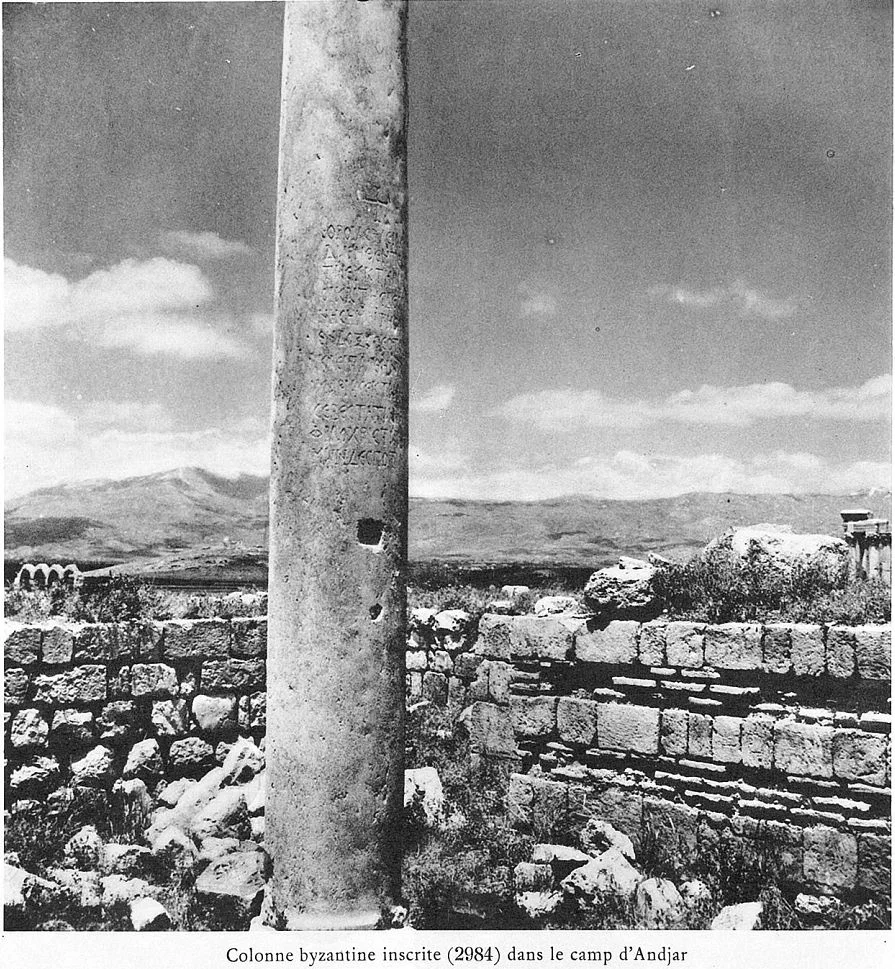
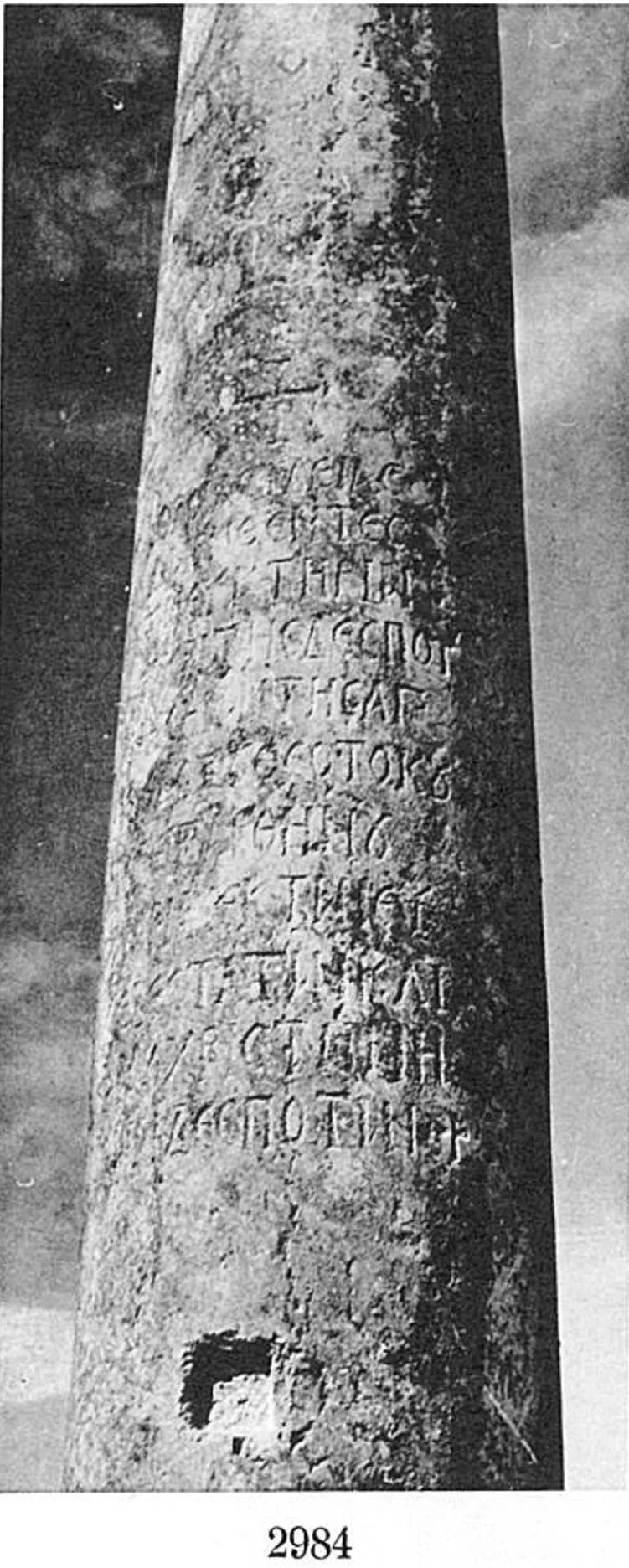
Greek inscription from a boundary stone marking the asylum of a church/oratory (eukterios oikos) dedicated to *Mary (Mother of Christ, S00033). Found at Anğarr, near el-Maṣna and Heliopolis/Baalbek in the Beqaa Valley (east Lebanon/south-west Phoenicia). Probably 6th c.
- Language
- Greek
- Date from
- 500
- Date to
- 750
- Evidence type
- Inscriptions
- Evidence subtype
- Formal inscriptions (stone, mosaic, etc.)
- Evidence region
- Syria with Phoenicia
- Evidence location
- Anğarr; Antioch on the Orontes, Ἀντιόχεια, Antiocheia, Antiochia ad Orontem, Ἀντιόχεια Μεγάλη, Ἀντιόχεια ἐπὶ Ὀρόντου, Antakya; Heliopolis/Baalbek; Antioch on the Orontes, Ἀντιόχεια, Antiocheia, Antiochia ad Orontem, Ἀντιόχεια Μεγάλη, Ἀντιόχεια ἐπὶ Ὀρόντου, Antakya
- Cult region
- Syria with Phoenicia
- Cult location
- Anğarr; Antioch on the Orontes, Ἀντιόχεια, Antiocheia, Antiochia ad Orontem, Ἀντιόχεια Μεγάλη, Ἀντιόχεια ἐπὶ Ὀρόντου, Antakya; Heliopolis/Baalbek; Antioch on the Orontes, Ἀντιόχεια, Antiocheia, Antiochia ad Orontem, Ἀντιόχεια Μεγάλη, Ἀντιόχεια ἐπὶ Ὀρόντου, Antakya
- Cult date from
- 500
- Cult date to
- 750
Text
+
ὅροι ἀσυλείας
δωρηθέντες
τῷ εὐκτηρίῳ
οἴκῳ τῆς δεσποί-
νης ἡμῶν τῆς ἁγ(ίας)
ἐνδοξ(οτάτης) Θεοτόκου
κ(αὶ) ἀειπαρθήνου
Μαρίας ἐκ τῶν εὐ-
σεβεστάτων καὶ
φιλοχρίστων ἡ-
μῶν δεσποτῶν
'+ Boundaries of the asylum, awarded to the church (eukterios oikos) of Our Lady, the Holy and Glorious God-Bearer (Theotokos) and forever Virgin Mary, by our most pious and Christ-loving emperors.'
Text: IGLS 6, no. 2984.
Source
A column situated in front of the Ummayad palace at Anğarr near el-Maṣna (implausibly identified by the editor as Chalcis sub Libano, see: SEG 33, 1252). There is no published description.
Seen and photographed by Maurice Chéhab and transcribed based on his photograph by Henri Seyrig. The transcription was published by Jean-Paul Rey Coquais in 1967.
Discussion
The inscription marked the boundaries of the asylum of a sanctuary dedicated to Mary. In lines 8-11 we have a reference to unnamed emperors who granted this right of asylum to the said shrine. Other dated boundary stones from the East were usually authorised by 6th c. emperors. Therefore, it is probable that also our inscription dates from the same period.
Bibliography
Edition:
Rey-Coquais, J.-P., Inscriptions grecques et latines de la Syrie, vol. 6: Baalbek et Beqa’: nos. 2711-3017 (BAH 78, Paris: P. Geuthner, 1967), no. 2984 and Plates L, LI.
Reference works:
Supplementum Epigraphicum Graecum 33, 1252.
Images
Associated saints
| Saint | Name in source | Certainty |
|---|---|---|
| Mary, Mother of Christ (S00033) | Μαρία | Certain |
Cult classifications
- Cult Places
- Cult building - independent (church)
- Non Liturgical Activity
- Awarding privileges to cult centres; Seeking asylum at church/shrine
- People
- Monarchs and their family
Record author
Paweł Nowakowski
Entry date
21/10/2016
Citation
Paweł Nowakowski, Cult of Saints, E01954 — https://csla.history.ox.ac.uk/record.php?recid=E01954