
E01968
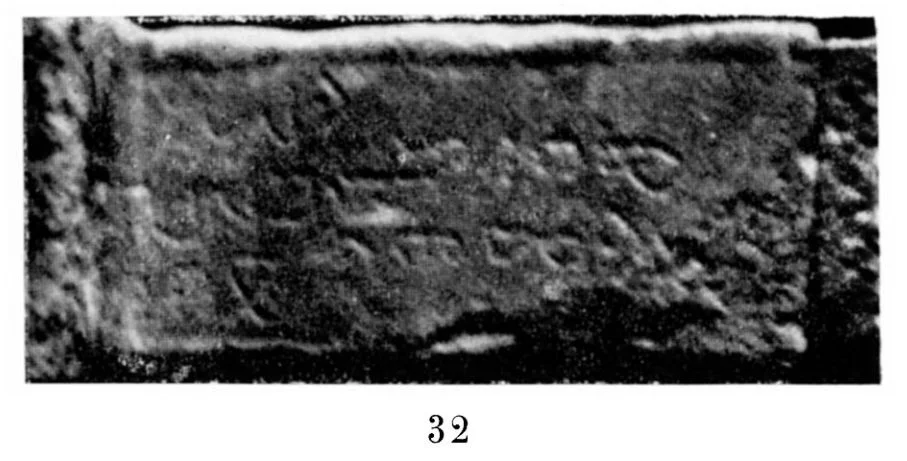
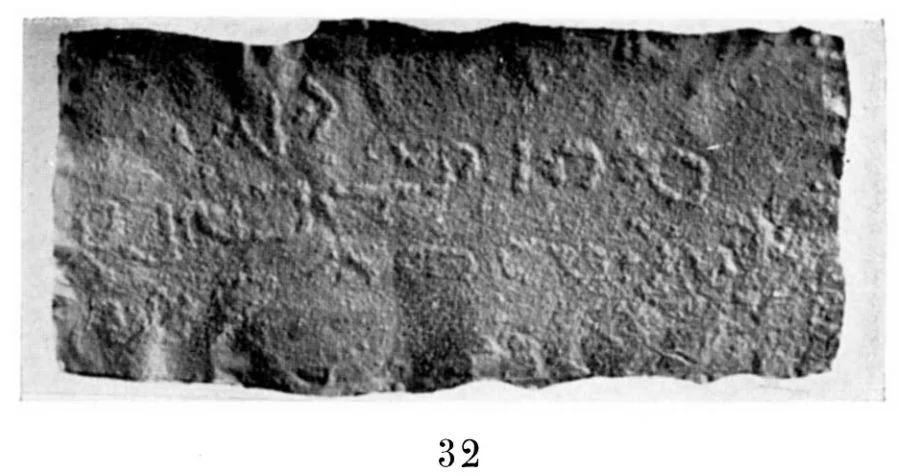
Syriac inscription referring to *Kosmas (S01005), a local martyr of the area of Sekizlar (near Hierapolis-Bambyke/Manbij and al-Bab in north Syria). Found at Sekizlar. Probably late antique.
- Language
- Syriac
- Date from
- 300
- Date to
- 750
- Evidence type
- Inscriptions
- Evidence subtype
- Formal inscriptions (stone, mosaic, etc.)
- Evidence region
- Syria with Phoenicia
- Evidence location
- Hierapolis Euphratensis; Antioch on the Orontes, Ἀντιόχεια, Antiocheia, Antiochia ad Orontem, Ἀντιόχεια Μεγάλη, Ἀντιόχεια ἐπὶ Ὀρόντου, Antakya; Sekizlar; Antioch on the Orontes, Ἀντιόχεια, Antiocheia, Antiochia ad Orontem, Ἀντιόχεια Μεγάλη, Ἀντιόχεια ἐπὶ Ὀρόντου, Antakya
- Cult region
- Syria with Phoenicia
- Cult location
- Hierapolis Euphratensis; Antioch on the Orontes, Ἀντιόχεια, Antiocheia, Antiochia ad Orontem, Ἀντιόχεια Μεγάλη, Ἀντιόχεια ἐπὶ Ὀρόντου, Antakya; Sekizlar; Antioch on the Orontes, Ἀντιόχεια, Antiocheia, Antiochia ad Orontem, Ἀντιόχεια Μεγάλη, Ἀντιόχεια ἐπὶ Ὀρόντου, Antakya
- Cult date from
- 300
- Cult date to
- 750
Text
ܕܟܝܪ
ܩܙܡܐ
ܕܣܗܕ ܒܫܢܬ
ܬ ܒ ܡ
'Remembered be Kosmas who was martyred in the year 442 (?).'
Text: Jarry 1967, no. 32.
Translation: S. Minov.
Source
A stone stele. H. 0.32 m; W. 0.66 m; Th. 0.42 m. Letter height 0.04-0.07 m. When recorded it was reused as the base of a pillar in a stable.
Seen and copied by Jacques Jarry in 1963 (while he was a member of the 1963 expedition led by Georges Tchalenko), and published in 1967.
Discussion
The inscription mentions an otherwise unattested martyr Kosmas. His martyrdom is dated according to the Seleucid era. Its year, read by Jarry as 442 (for his comments on the legibility of each sign of this number, see: his p. 158), corresponds to AD 110/111, therefore the reign of the emperor Trajan. A reference to the exact date of the martyrdom of a saint is an uncommon feature in inscriptions.
Though the inscription reads literally that it was erected 'in memory' of Kosmas, it is very unlikely to be an epitaph for this martyr. Jarry notes that this Syriac formula might be used in the sense of 'for the glory' of the saint, as a Syriac inscription from Dahes (Jarry 1967, no. 19) records the construction of a church 'in memory of Christ' (i.e. 'for the glory of Christ'). Our inscription is therefore also likely to celebrate the completion of a similar undertaking.
Dating: The date given in line 4 almost certainly does not refer to the carving of the inscription. According to Jarry the letter forms suggest that the text is contemporary to the Syriac inscription from Dahes mentioned above, which means that it probably dates to the late antique period.
Bibliography
Edition:
Jarry, J., “Inscriptions arabes, syriaques et grecques du massif du Bélus en Syrie du nord”, Annales islamologiques 7 (1967), 157, no. 32.
Further reading:
Peña, I., Lieux de pèlerinage en Syrie (Milan: Franciscan Printing Press, 2000), 27.
Tabula Imperii Byzantini, vol. 15, 1677–1678.
Images
Associated saints
| Saint | Name in source | Certainty |
|---|---|---|
| Kosmas, martyr of the area of Sekizlar (north Syria), ob. 110/111 (S01005) | ܩܙܡܐ | Certain |
Cult classifications
- Cult Places
- Cult building - unspecified
- Non Liturgical Activity
- Construction of cult buildings
Record author
Paweł Nowakowski, Sergey Minov
Entry date
28/10/2016
Citation
Paweł Nowakowski, Sergey Minov, Cult of Saints, E01968 — https://csla.history.ox.ac.uk/record.php?recid=E01968