
E03504
Greek dedicatory inscription on a bronze lamp-holder (polycandelon), recording its offering to a church of *John (probably the Baptist, S00020, or possibly the Apostle and Evangelist, S00042). Provenance unknown, probably Palestine, Syria, or Arabia. Probably 6th-7th c.
- Language
- Greek
- Date from
- 500
- Date to
- 700
- Evidence type
- Images and objects; Inscriptions
- Evidence subtype
- Inscribed objects; Lamps, ampullae and tokens; Other portable objects (metalwork, ivory, etc.)
- Evidence region
- Arabia; Palestine with Sinai; Syria with Phoenicia
- Evidence location
- ; Antioch on the Orontes, Ἀντιόχεια, Antiocheia, Antiochia ad Orontem, Ἀντιόχεια Μεγάλη, Ἀντιόχεια ἐπὶ Ὀρόντου, Antakya; ; Caesarea Maritima, Καισάρεια, Kaisareia, Caesarea, Kayseri, Turris Stratonis; ; Sakkaia / Maximianopolis, Σακκαια, Sakkaia, Saccaea, Eaccaea, Maximianopolis, Shaqqa, Schaqqa, Shakka
- Cult region
- Arabia; Palestine with Sinai; Syria with Phoenicia
- Cult location
- ; Antioch on the Orontes, Ἀντιόχεια, Antiocheia, Antiochia ad Orontem, Ἀντιόχεια Μεγάλη, Ἀντιόχεια ἐπὶ Ὀρόντου, Antakya; ; Caesarea Maritima, Καισάρεια, Kaisareia, Caesarea, Kayseri, Turris Stratonis; ; Sakkaia / Maximianopolis, Σακκαια, Sakkaia, Saccaea, Eaccaea, Maximianopolis, Shaqqa, Schaqqa, Shakka
- Cult date from
- 500
- Cult date to
- 700
Text
In 2014 Davide Bianchi published two bronze lamp-holders (polycandela) of unknown provenance, housed in the Archaeological Museum of the Studium Biblicum Franciscanum (SBF) in Jerusalem. According to Bianchi it is not known how and when the Museum came into possession of these objects.
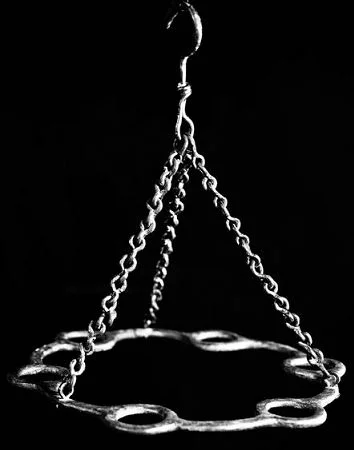
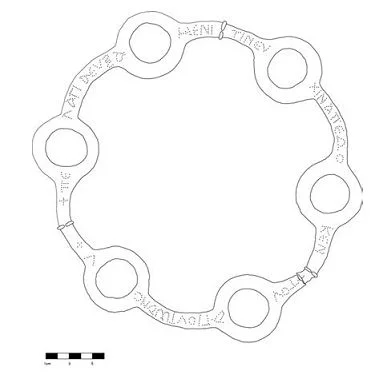
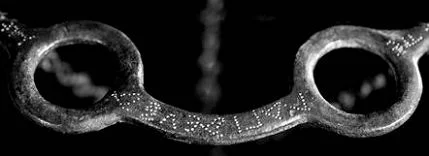
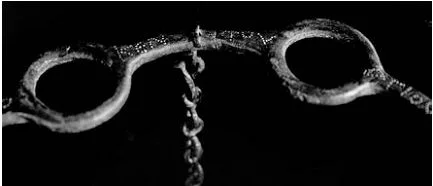
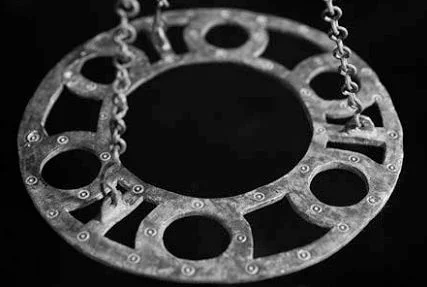
Polycandelon 1 (diameter 0.28 m; weight 1.071 kg) is a bronze ring with six slots for lamps. It is fitted with three loops for attaching chains and a hook. The inscription is punched, and runs on the upper surface of the ring, divided by lamp-slots.
Inscription:
+ Πελαγία εὐξαμένι τὶν εὐχὶν ἀπέδοκεν + τοῦ ἁγίου Ἰωάν<ν>ου
[ἀπέδοκεν Feissel based on the drawing, ἀπέδοχεν Bianchi]
'+ Pelagia, having sworn a vow, fulfilled it. + Of Saint John.'
Text: Bianchi 2014, 360, with a lightly altered reading by D. Feissel in BE (2016), 531.
Polycandelon 2 (diameter 0.235 m; weight 0.892 kg) consists of two rings connected by six slots for lamps and three spikes, to which three chains are connected by loops. It was likewise hung by a hook. The upper surface is flat and decorated with numerous concentric circles. It bears no inscription.
Discussion
It seems that the two objects are not connected and were originally offered to different sanctuaries. The inscription on Polycandelon 1 says that it was a votive offering by one Pelagia. Bianchi notes that the second part of the inscription indicates a church of John, the owner of the object, rather than being an integral part of the votive formula. The identity of that 'Saint John' is not clear, the most plausible explanation is that he was either John the Baptist or John the Apostle and Evangelist, the first option being more likely. Bianchi points out that John the Baptist was venerated, for example, at the Sanctuary of the Visitation at 'Ein Kerem near Jerusalem (cf. E02829), where some lamp-holders were found, but there is no clear link between that shrine and our objects.
Bianchi cites a number of similar polycandela, some inscribed, other not, for example our E02587 from Umm er-Rasas with a dedicatory inscription to *Sergios, soldier and martyr of Rusafa. Based on a comparative study of their style, he places our polycandela in the 6th or 7th c.
Bianchi prudently notes that the dedicatory formula τὴν εὐχὴν ἀπέδωκεν is well attested in both pagan and Christian dedications. We have recorded it in a monumental inscription at Lamos in Cilicia (E01082: υἱοὶ Ἀρουαρα τὴν εὐχὴν ἀπέδωκεν τῷ ἁ<γί>ῳ + Κόνωνει +/'sons of Arvaras (?), having made a vow to Saint Konon, fulfilled it'); on a reliquary cross from Seleucia ad Calycadnum in Isauria or Seleucia Pieria in north Syria (E01826: Ἰωάννης υεἱὸς Ἐνγολίου εὐξάμενος τὴν εὐχὴν ἀπέδωκα/'I, Ioannes, son of Engolios, having made a vow, fulfilled it'), and on a silver lamp-holder from the Kaper Koraon treasure, north Syria (IGLS V 2034; $EXXXX: εὐξάμενοι τὴν εὐχὴν ἀπέδωκαν τῶ ἁγίου Σεργίου καὶ Βάχχου/'Having made a vow to Saint Sergios and Bakchos, they fulfilled it', followed by the names of four brothers).
Bibliography
Edition:
Bianchi, D., "Due polycandela dal Museo Archeologico dello Studium Biblicum Franciscanum", in: G.C. Bottini, L.D. Chrupcała, J. Patrich (eds.), Knowledge and Wisdom. Archaeological and Historical Essays in Honour of Leah Di Segni (Milano: Edizioni Terra Santa), 363-370.
Reference works:
Bulletin épigraphique (2016), 531.
Images
Associated saints
| Saint | Name in source | Certainty |
|---|---|---|
| John the Baptist (S00020) | Ἰωάνης | Uncertain |
| John, the Apostle and Evangelist (S00042) | Ἰωάνης | Uncertain |
Cult classifications
- Cult Places
- Cult building - independent (church)
- Cult Related Objects
- Ex-votos; Oil lamps/candles
- Non Liturgical Activity
- Bequests, donations, gifts and offerings; Prayer/supplication/invocation; Vow
- People
- Women
Record author
Paweł Nowakowski
Entry date
28/07/2017
Citation
Paweł Nowakowski, Cult of Saints, E03504 — https://csla.history.ox.ac.uk/record.php?recid=E03504