
E04121
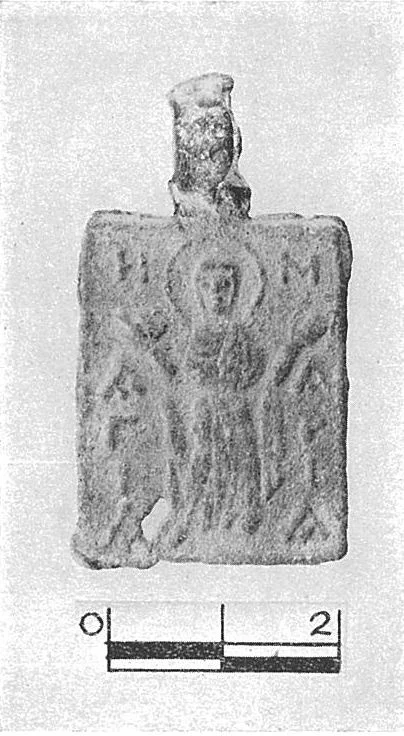
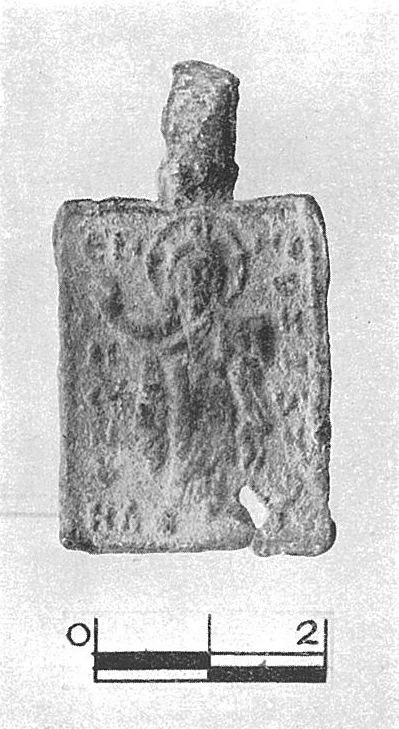
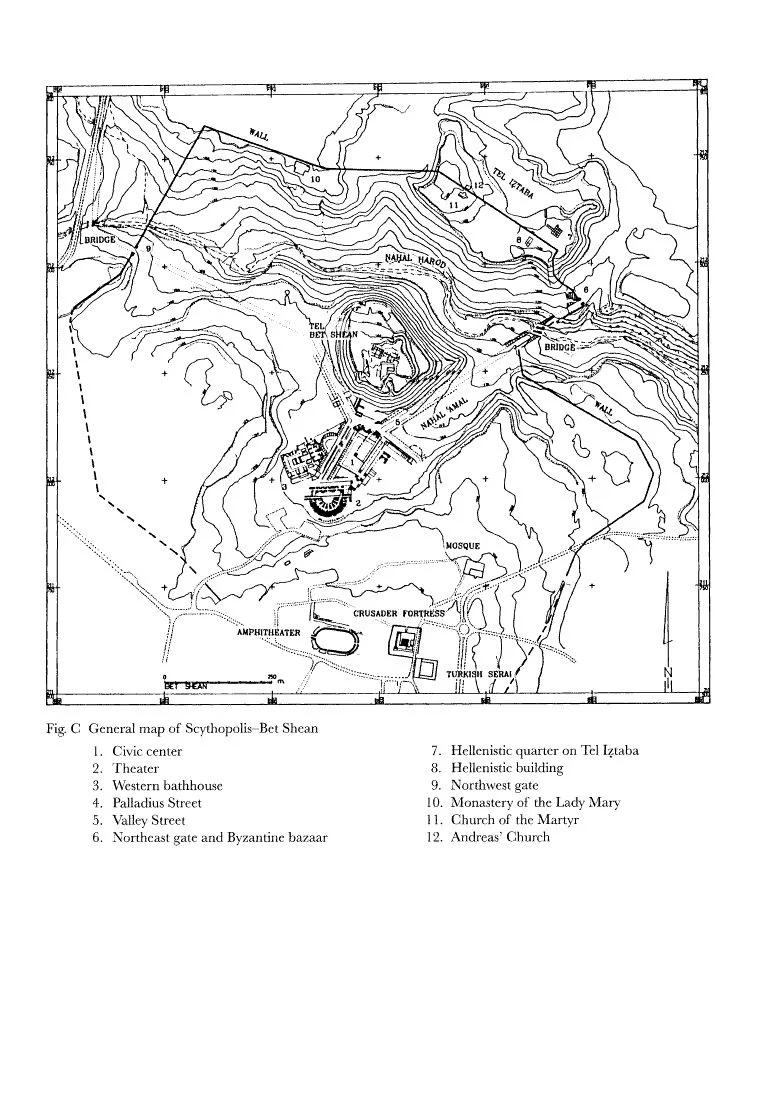
Lead plaque with an image of *Mary (Mother of Christ, S00033) labelled in Greek. Found in the monastery on Tell Iztabba at Beit She'an/Skythopolis (Roman province of Palaestina II). Probably second half of the 6th/first half of the 7th c.
- Language
- Greek
- Date from
- 500
- Date to
- 636
- Evidence type
- Images and objects; Inscriptions
- Evidence subtype
- Inscribed objects; Other portable objects (metalwork, ivory, etc.)
- Evidence region
- Palestine with Sinai
- Evidence location
- Skythopolis; Caesarea Maritima, Καισάρεια, Kaisareia, Caesarea, Kayseri, Turris Stratonis
- Cult region
- Palestine with Sinai
- Cult location
- Skythopolis; Caesarea Maritima, Καισάρεια, Kaisareia, Caesarea, Kayseri, Turris Stratonis
- Cult date from
- 500
- Cult date to
- 636
Text
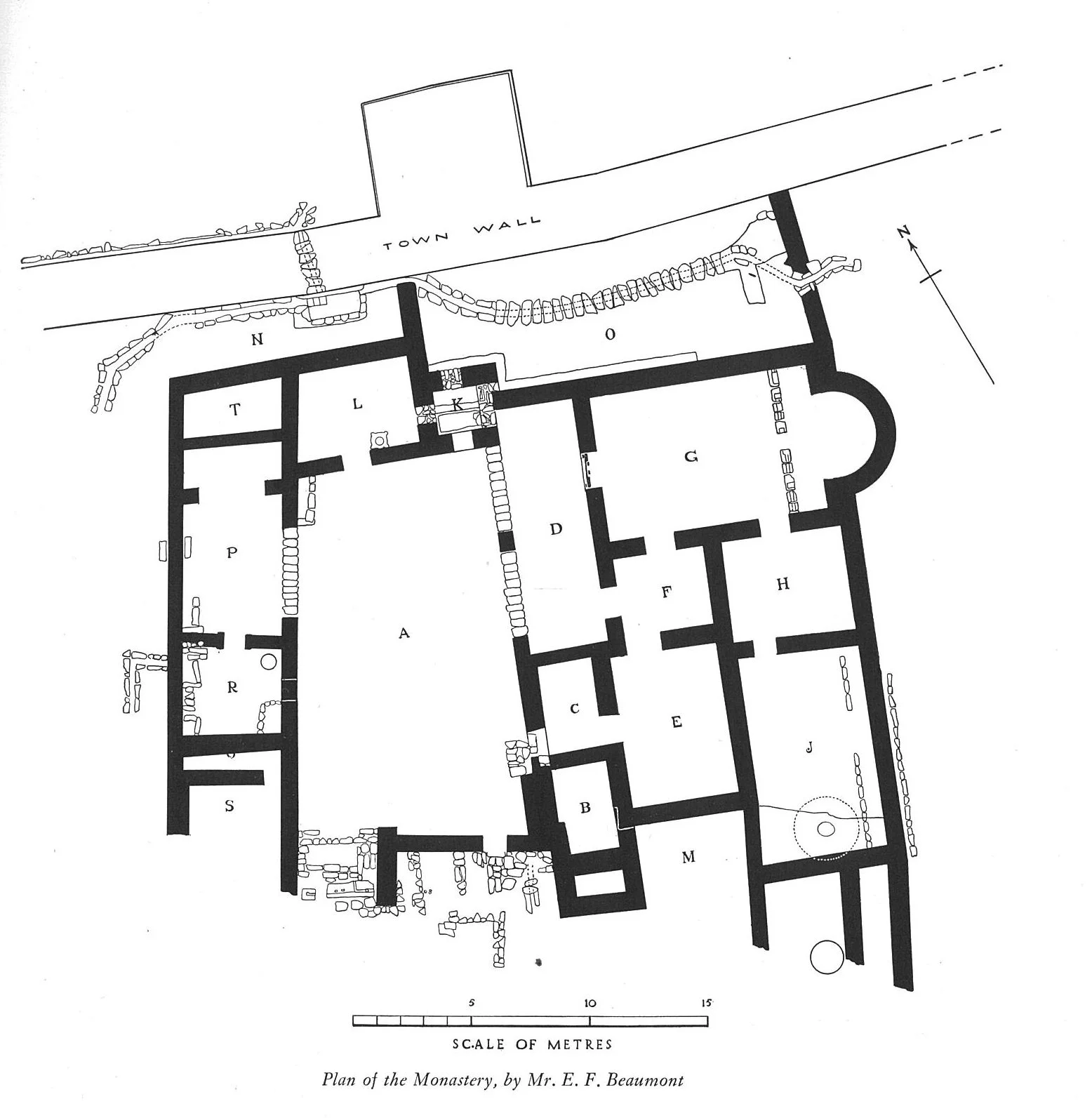
Small rectangular lead plaque, probably with a loop on its top edge. Presumably meant to be worn around the neck. Found in 1930 in Room L, in the north section of the monastery on Tell Iztabba. Dimensions c. 2 cm x 3 cm. First published in 1931 by Gerald Milnes Fitzgerald with a photograph of the obverse. Photographs of both sides, and transcriptions, were published by Fitzgerald in 1939.
obverse: Standing male figure with nimbus. His right hand is raised in the act of blessing. In his left hand he is holding a book. The editor suggests that the figure is trampling a snake, but this is not clear in the photograph. Label: Ἐμμανουὴλ μεθ' ἡμῶν/'Emmanuel. God is with us!'. This is certainly an image of Christ. The inscription is a reminiscence of a passage from the Gospel according to Matthew: καὶ καλέσουσιν τὸ ὄνομα αὐτοῦ Ἐμμανουήλ· ὅ ἐστιν μεθερμηνευόμενον 'Μεθ’ ἡμῶν ὁ θεός' / 'They shall call his name Emmanuel, which being interpreted is, God with us' (Matthew 1:23, cf. Psalm 46:7; Is. 7:14).
reverse: Standing female figure in the orant posture, with nimbus. Label: ἡ ἁγία Μαρία/'Holy Mary'. This is certainly Mary, Mother of Christ.
Source
The monastery on Tell Iztabba at Beit She'an/Skythopolis, sometimes termed the monastery 'of Lady Maria' after a woman who built there at least one chapel, was excavated in 1930 by Gerald Milnes Fitzgerald, on behalf of the University of Pennsylvania. For a description, see comments to E4120.
Discussion
Dating: The site is broadly datable to the 6th/early 7th c., based on the contents of mosaic inscriptions. The excavators presumed that the monastery was occupied up to the Arab conquest of the region (AD 636), and, therefore, small objects found on the site, are likely to be deposits of the 6th or early 7th c.
Bibliography
Edition:
Fitzgerald, G.M., A sixth century monastery at Beth Shan (Skythopolis) (Philadelphia: Pub. for the University museum by the University of Pennsylvania Press, 1939), 11 and Plate IV.
Fitzgerald, G.M., "Excavations at Beth-Shan in 1930", Palestine Exploration Fund Quarterly Statement (1931), 68 and Plate VI.
Further reading:
Meimaris, Y., Sacred names, saints, martyrs and church officials in the Greek inscriptions and papyri pertaining to the Christian Church of Palestine (Athens: National Hellenic Research Foundation, Center for Greek and Roman Antiquity, 1986), 82, no. 519.
Tsafrir, Y., Foerster, G., "Urbanism at Scythopolis-Bet Shean in the Fourth to Seventh Centuries", Dumbarton Oaks Papers 51 (1997), 104.
Images
Associated saints
| Saint | Name in source | Certainty |
|---|---|---|
| Mary, Mother of Christ (S00033) | Μαρία | Certain |
Cult classifications
- Cult Related Objects
- Other
- Use of Images
- Private ownership of an image
Record author
Paweł Nowakowski
Entry date
08/10/2017
Citation
Paweł Nowakowski, Cult of Saints, E04121 — https://csla.history.ox.ac.uk/record.php?recid=E04121