
E04386
Syriac inscription commemorating the construction and completion of a church dedicated to *Phokas (probably the martyr of Antioch, S00413). Found at Basufan in north Syria, near Qalat Semaan, c. 30 km to the north-west of Beroia/Aleppo. Dated 491/492 (beginning of the construction) and 495/496 (completion).
- Language
- Syriac
- Date from
- 491
- Date to
- 496
- Evidence type
- Archaeological and architectural; Inscriptions
- Evidence subtype
- Cult buildings (churches, mausolea); Formal inscriptions (stone, mosaic, etc.)
- Evidence region
- Syria with Phoenicia
- Evidence location
- Basufan; Antioch on the Orontes, Ἀντιόχεια, Antiocheia, Antiochia ad Orontem, Ἀντιόχεια Μεγάλη, Ἀντιόχεια ἐπὶ Ὀρόντου, Antakya; Beroia; Antioch on the Orontes, Ἀντιόχεια, Antiocheia, Antiochia ad Orontem, Ἀντιόχεια Μεγάλη, Ἀντιόχεια ἐπὶ Ὀρόντου, Antakya; Qal'at Sem'an; Antioch on the Orontes, Ἀντιόχεια, Antiocheia, Antiochia ad Orontem, Ἀντιόχεια Μεγάλη, Ἀντιόχεια ἐπὶ Ὀρόντου, Antakya
- Cult region
- Syria with Phoenicia
- Cult location
- Basufan; Antioch on the Orontes, Ἀντιόχεια, Antiocheia, Antiochia ad Orontem, Ἀντιόχεια Μεγάλη, Ἀντιόχεια ἐπὶ Ὀρόντου, Antakya; Beroia; Antioch on the Orontes, Ἀντιόχεια, Antiocheia, Antiochia ad Orontem, Ἀντιόχεια Μεγάλη, Ἀντιόχεια ἐπὶ Ὀρόντου, Antakya; Qal'at Sem'an; Antioch on the Orontes, Ἀντιόχεια, Antiocheia, Antiochia ad Orontem, Ἀντιόχεια Μεγάλη, Ἀντιόχεια ἐπὶ Ὀρόντου, Antakya
- Cult date from
- 491
- Cult date to
- 496
Text
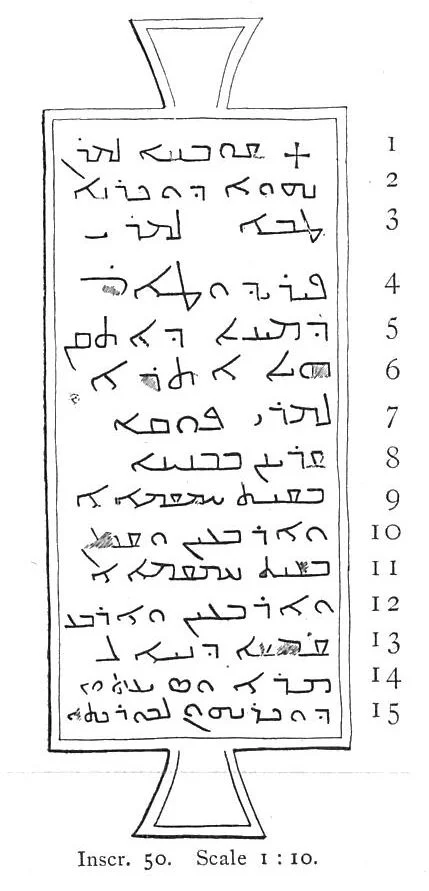
ܫܘܒܚܐ ܠܡܪܢ+
ܢܗܘܐ ܕܘܟܪܢـܐ
ܛܒـܐ ܠܡܪܝ
ܦܝܪܝܕܘܛـܐ
ܕܡܝܢـܐ ܕܐܬܩܢ
ܗܢـܐ ܐܬܪܐ
ܠܡܪܝ ܦܘܩـܐ
ܫܪܝܢܢ ܒܒܢܝܢـܐ
ܒܫܢܬ ܚܡܫܡـܐܐ
ܘܐܪܒܥܝܢ ܘܫܟܠܠܢ
ܒܫܢܬ ܚܡـܫܡـܐܐ
ܘܐܪܒܥܝܢ ܘܐܪܒܥ
ܫܡـܫـܐ ܕܢܝܐܠ
ܡܪܐ ܘܣܝܥܬܗܘܢ
ܕܘܟܪܢܗܘܢ ܠܒܘܪܟܬܐ
'+ Praise be to our Lord! Pious remembrance be to mār periodeutes (itinerant presbyter) Damianos, who founded this place for mār Phokas! We began the building in the year five hundred and forty, and we completed (it) in the year five hundred and forty four: the deacons Daniel, Mara, and their fellows. Their memory be blessed!'
Text: Littmann 1934, no. 50.
Translation: E. Littmann, lightly modified.
Source
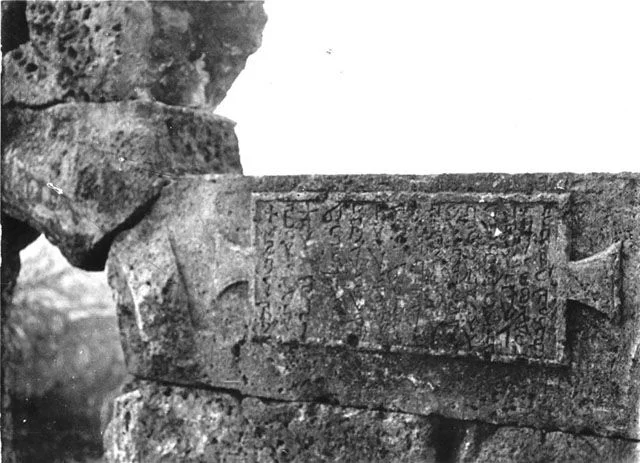
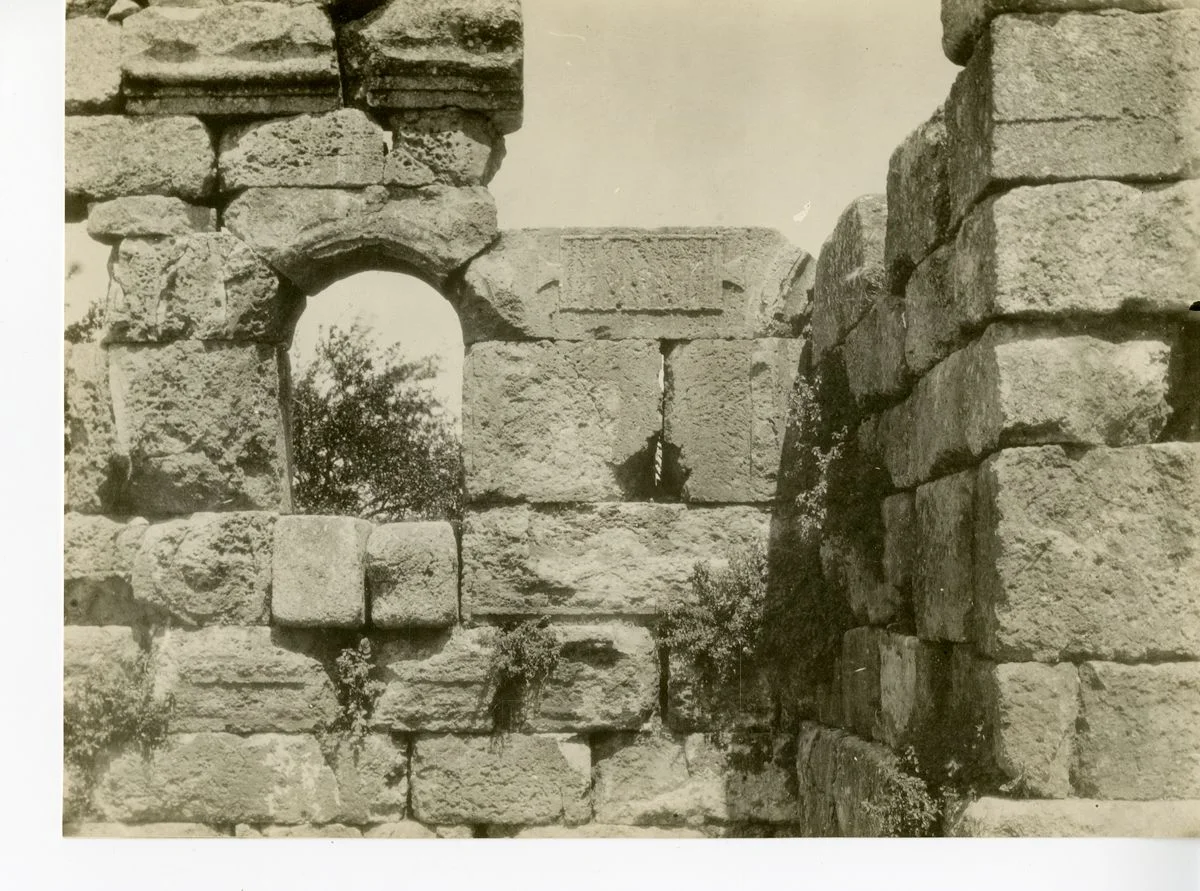
Carved on a raised stone plaque, shaped as a tabula ansata (H. 0.38 m; W. 0.81 m), built into the outer south wall of the church at Basufan, between two arched windows and two doorways. The moulding at the left-hand end of the block forms part of the adjacent window, so it is clearly in situ, although, curiously, the text is set out at a right-angle to the block. Letter height: line 1-13: 0.03-0.05 m; lines 14-15: 0.025-0.04 m.
The church is a three-aisled basilica (24 m x 15.4 m) with an apse flanked by two chambers. The shrine is of considerable importance, as it is believed to have been built on the plan of Qalaat Semaan, the sanctuary after which other churches in Jabal Semaan were modelled. Therefore, the date offered by our inscription is considered a terminus ante quem for Qalaat Semaan.
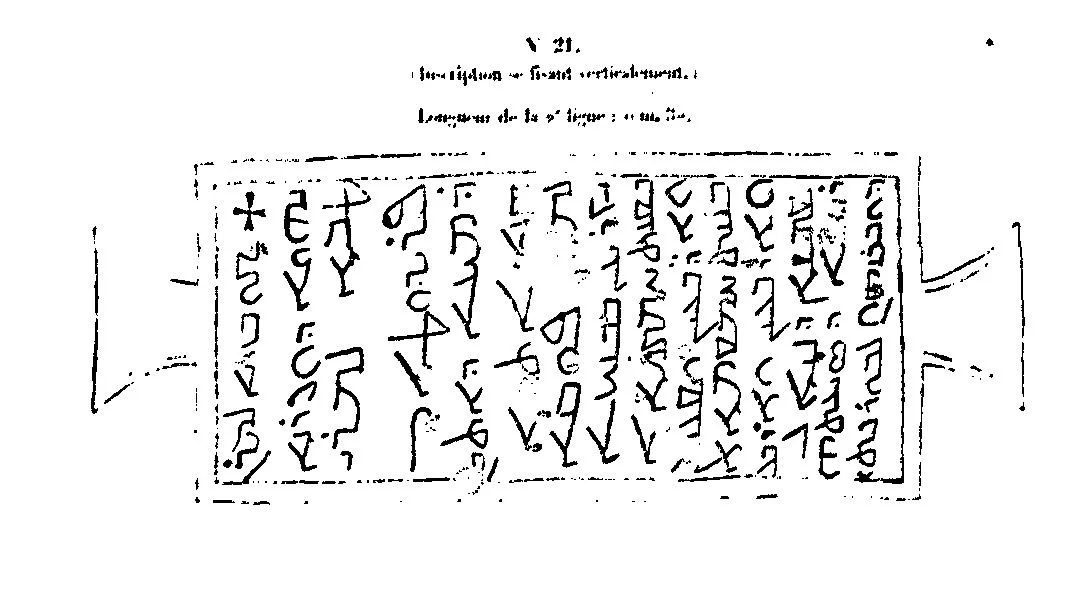
The inscription was first published by Henri Pognon in 1907. Revisited by the Princeton Archaeological Expedition to Syria and republished by Enno Littmann in 1934. We reprint the text as published by Littmann, for the slightly different readings of Pognon, see his edition and the comments by Littmann.
Discussion
The inscription commemorates two phases of the construction of the church, and says that it was dedicated to Saint Phokas, probably the martyr of Antioch. The church is termed here ܐܬܪܐ/'place' which is a counterpart of Greek τόπος, a frequently used denotation of Christian sanctuaries.
Based on a reference to the 'fellows' in line 14, Littmann suggests that the church belonged to a monastery, and points out that a monastery of Phokas is attested in AD 567 at Dārōsjāpā, probably identical with modern el-Buwētāt in Jabal Semaan, by the subscription of an abbot in a Syriac manuscript (see Littmann 1922, 182 and $EXXXX).
Dating: The inscription gives two dates computed according to the era of Antioch. The first date, the beginning of the construction, is the year 540 (= AD 491/492). The other, the completion of the church, is the year 544 (= AD 495/496).
Bibliography
Edition:
Littmann, E., Publications of the Princeton University Archaeological Expeditions to Syria in 1904-5 and 1909, division IV: Semitic Inscriptions, Section B: Syriac Inscriptions (Leiden: Brill, 1934), no. 50.
Pognon, H., Inscriptions sémitiques de la Syrie, de la Mésopotamie et de la région de Mossoul (Paris: Imprimerie nationale; Librairie V. Lecoffre, J. Gabalda, 1907), 60-61.
Further reading:
Littmann, E., "Zur Topographie der Antiochene und Apamene", Zeitschrift für Semitistik und verwandte Gebiete 1 (1922), 182.
Images
Associated saints
| Saint | Name in source | Certainty |
|---|---|---|
| Phokas, martyr of Antioch (S00413) | ܡܪܝ ܦܘܩـܐ | Certain |
Cult classifications
- Cult Places
- Cult building - independent (church); Cult building - monastic
- Non Liturgical Activity
- Construction of cult buildings
- People
- Ecclesiastics - lesser clergy; Ecclesiastics - monks/nuns/hermits
Record author
Paweł Nowakowski
Entry date
20/11/2017
Citation
Paweł Nowakowski, Cult of Saints, E04386 — https://csla.history.ox.ac.uk/record.php?recid=E04386