
E05950
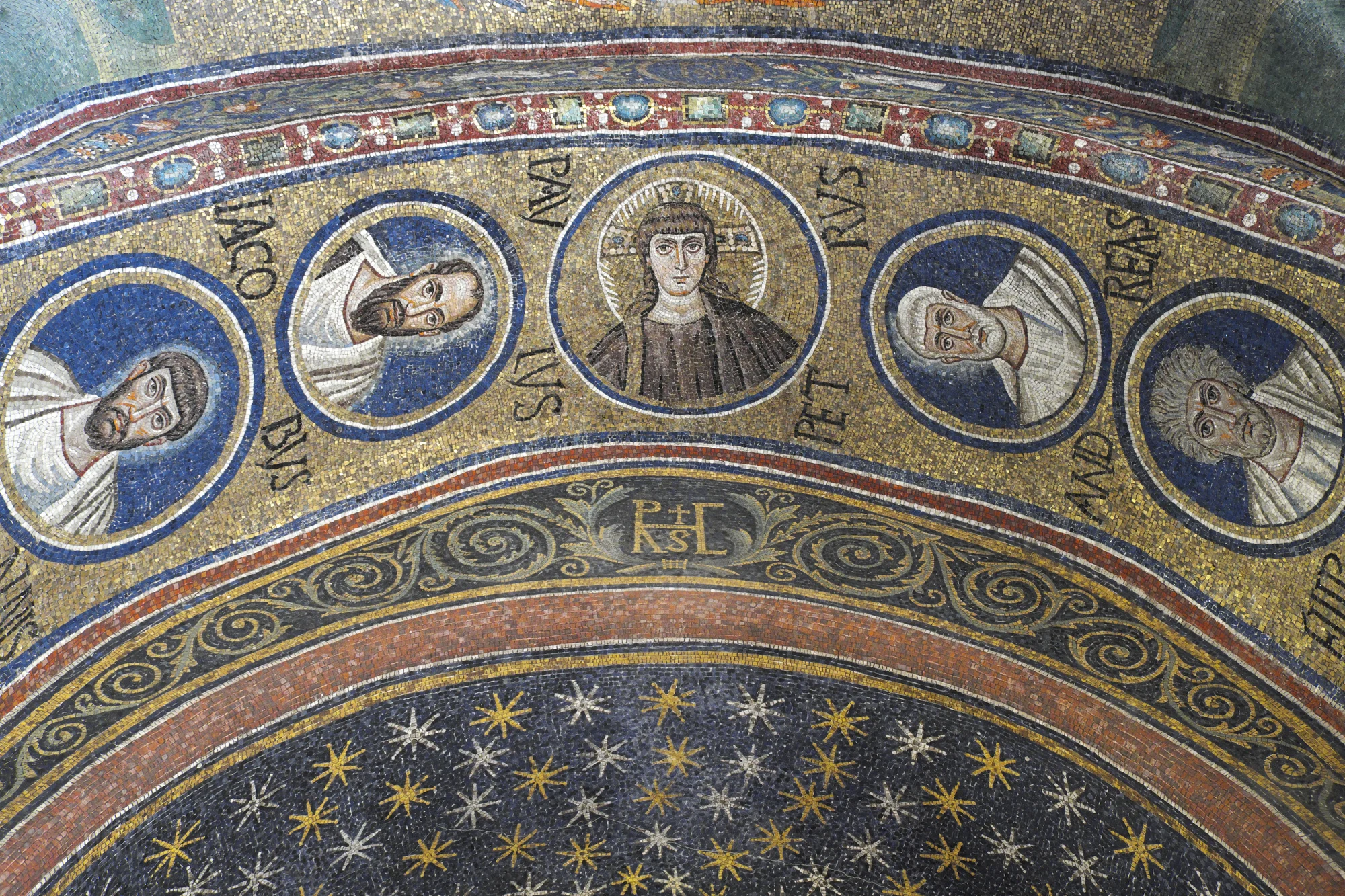
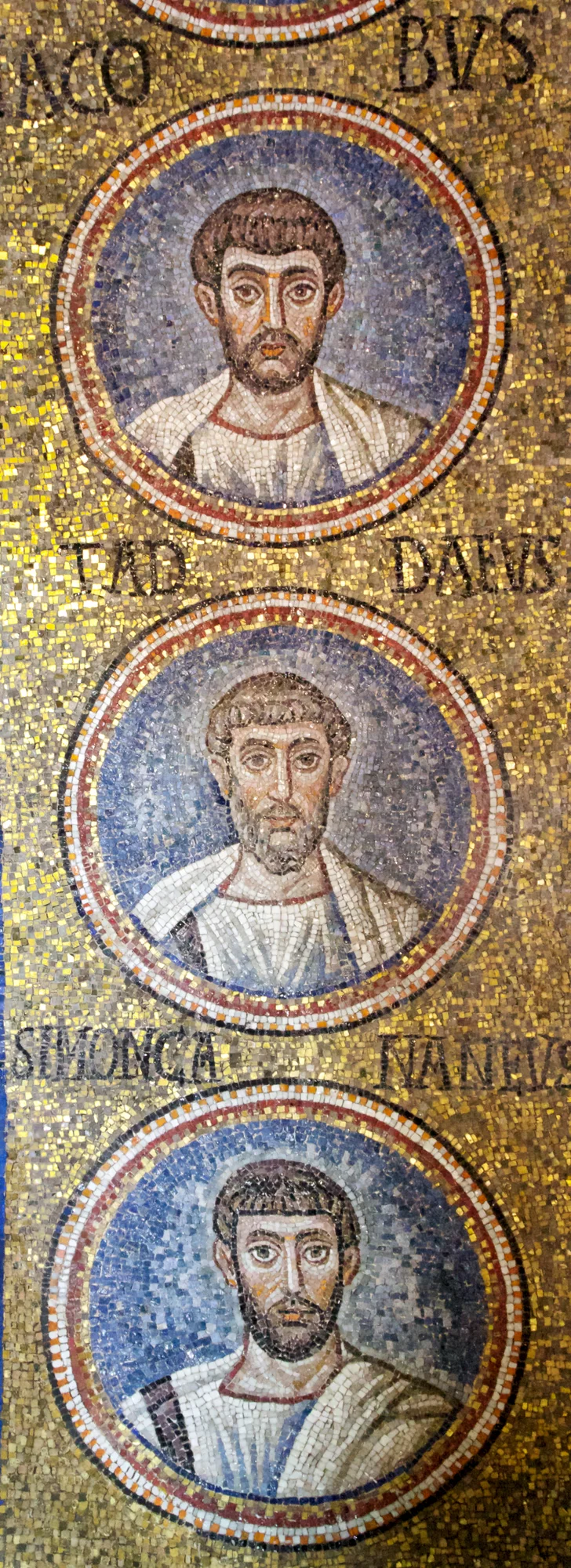
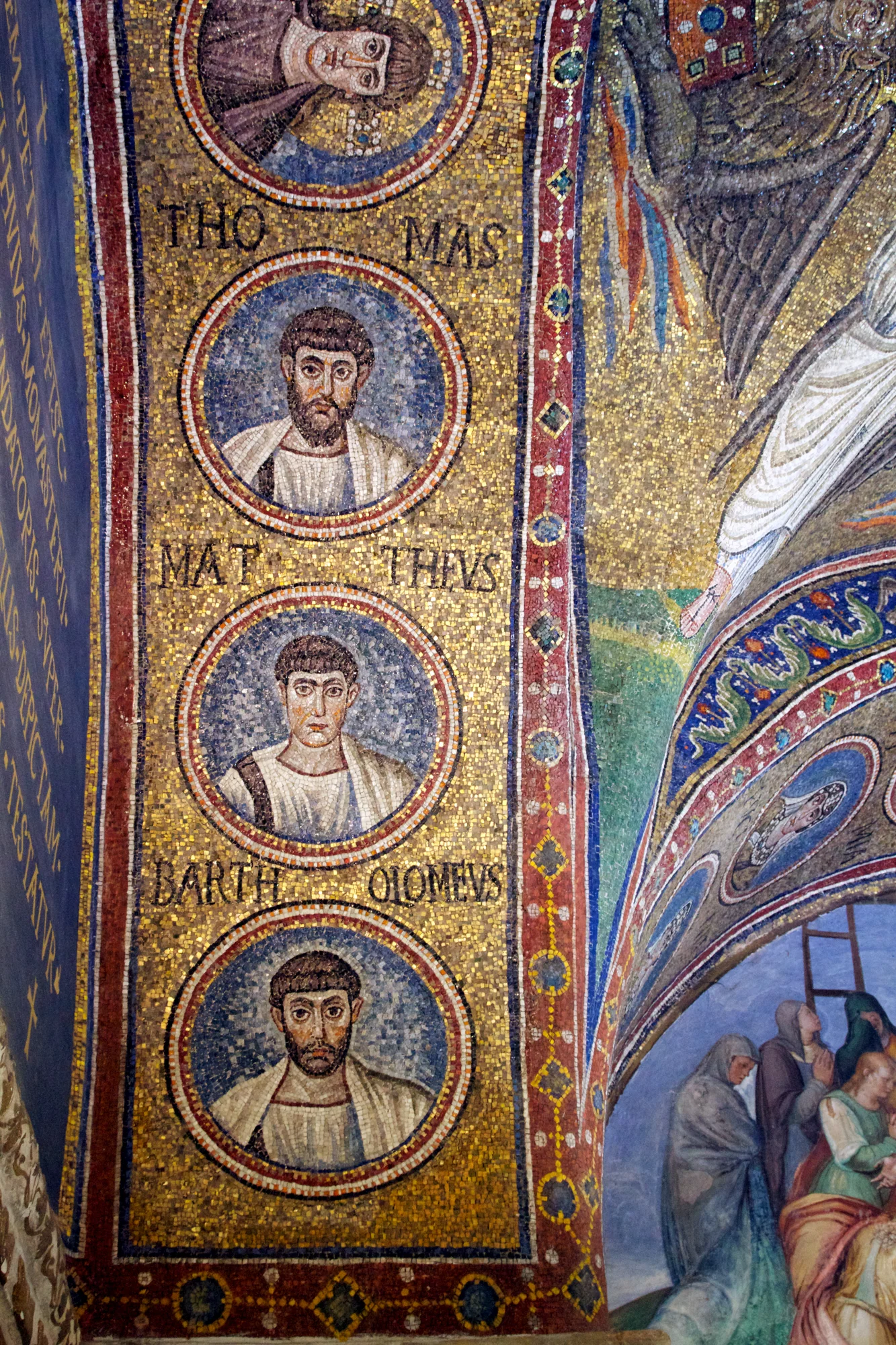
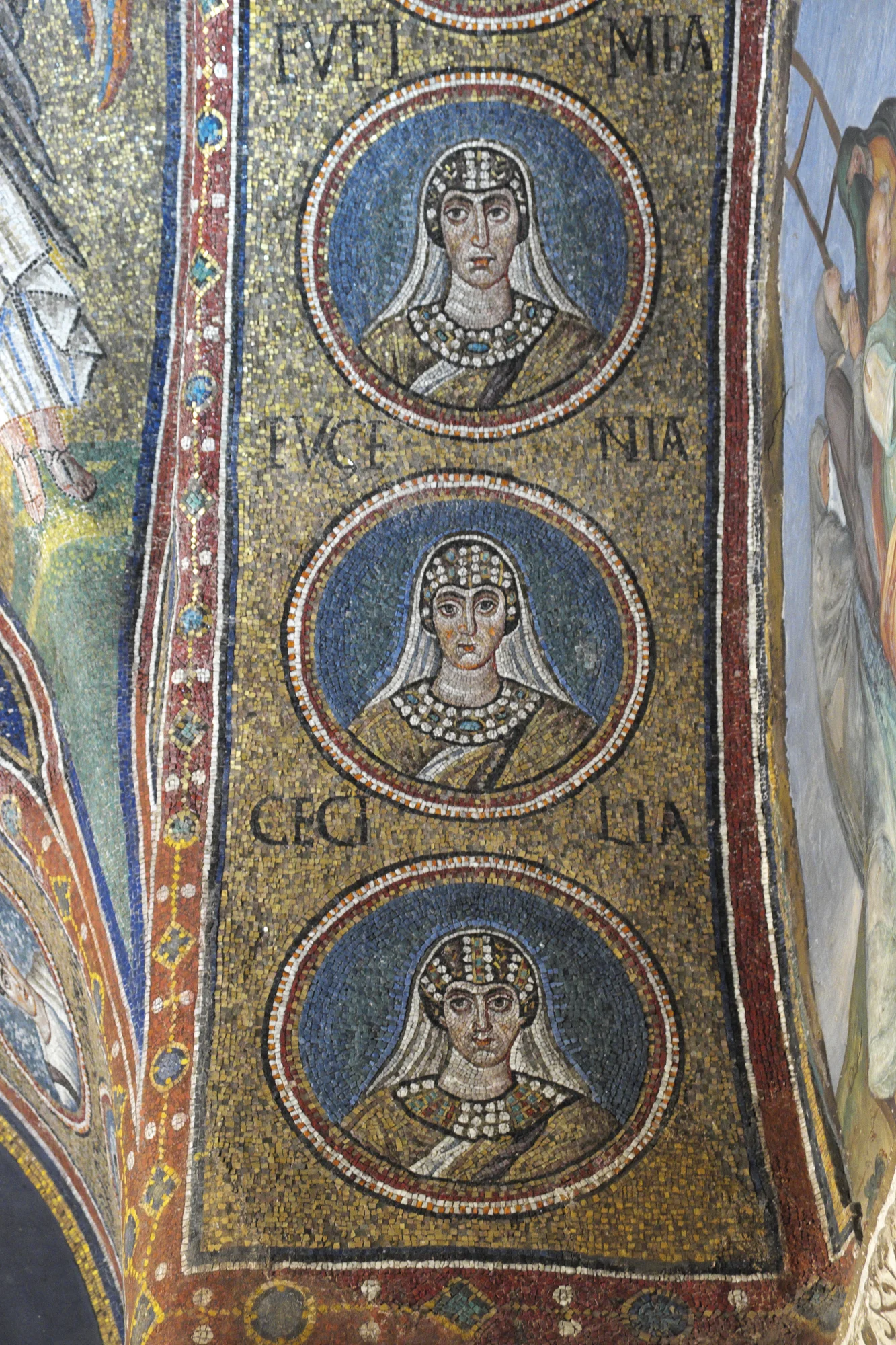
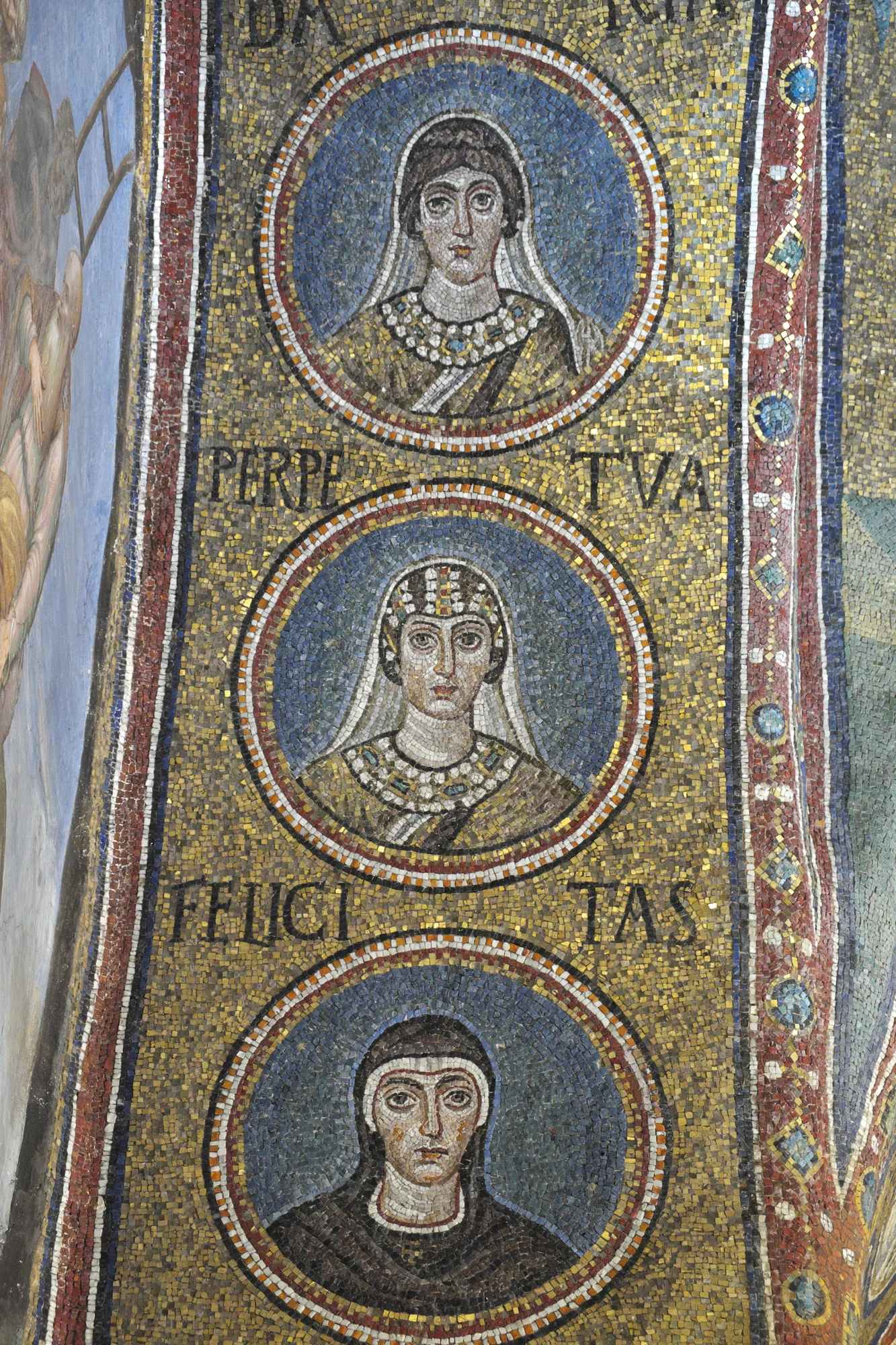
Mosaic roundels on the barrel vaults of the Cappella Arcivescovile of Ravenna (northern Italy), with portrait busts of twelve apostles and twelve martyrs (six female, six male); created 494/520.
- Date from
- 494
- Date to
- 520
- Evidence type
- Images and objects
- Evidence subtype
- Wall paintings and mosaics
- Evidence region
- Italy north of Rome with Corsica and Sardinia
- Evidence location
- Ravenna; Sardinia, Sardinia, Sardegna, Sardinia
- Cult region
- Italy north of Rome with Corsica and Sardinia
- Cult location
- Ravenna; Sardinia, Sardinia, Sardegna, Sardinia
- Cult date from
- 494
- Cult date to
- 520
Text
Mosaic in the Cappella Arcivescovile, Ravenna
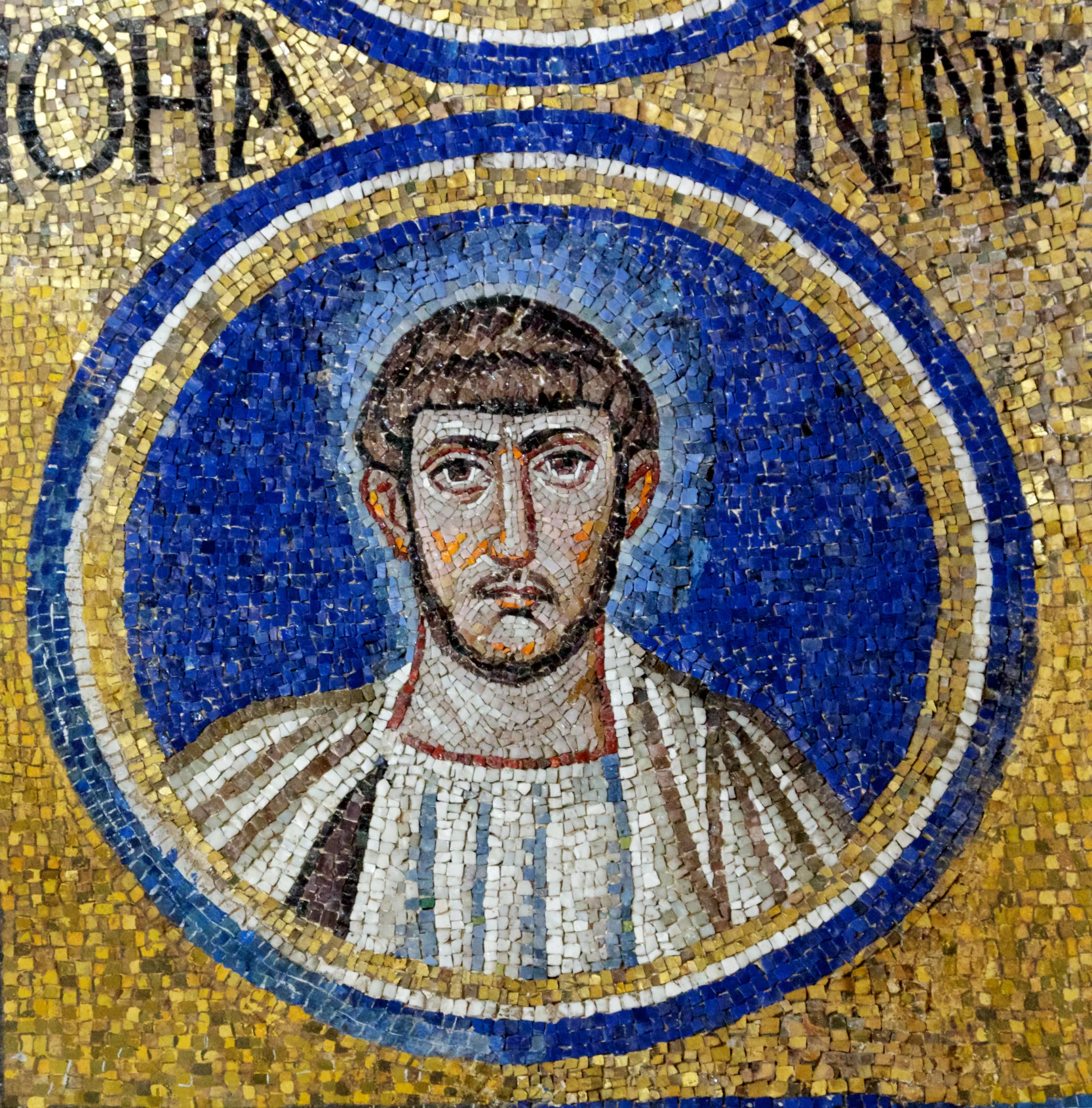
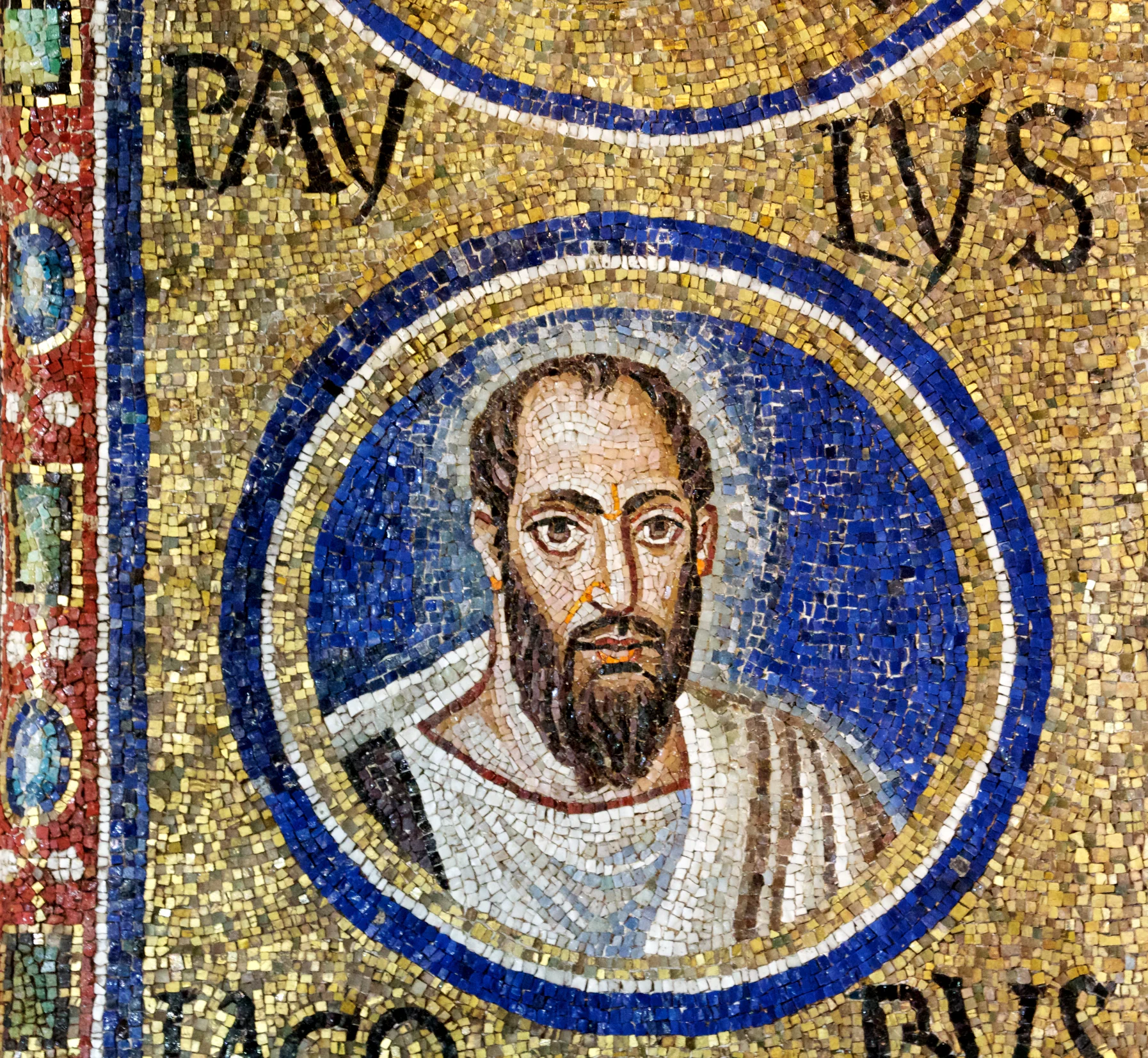
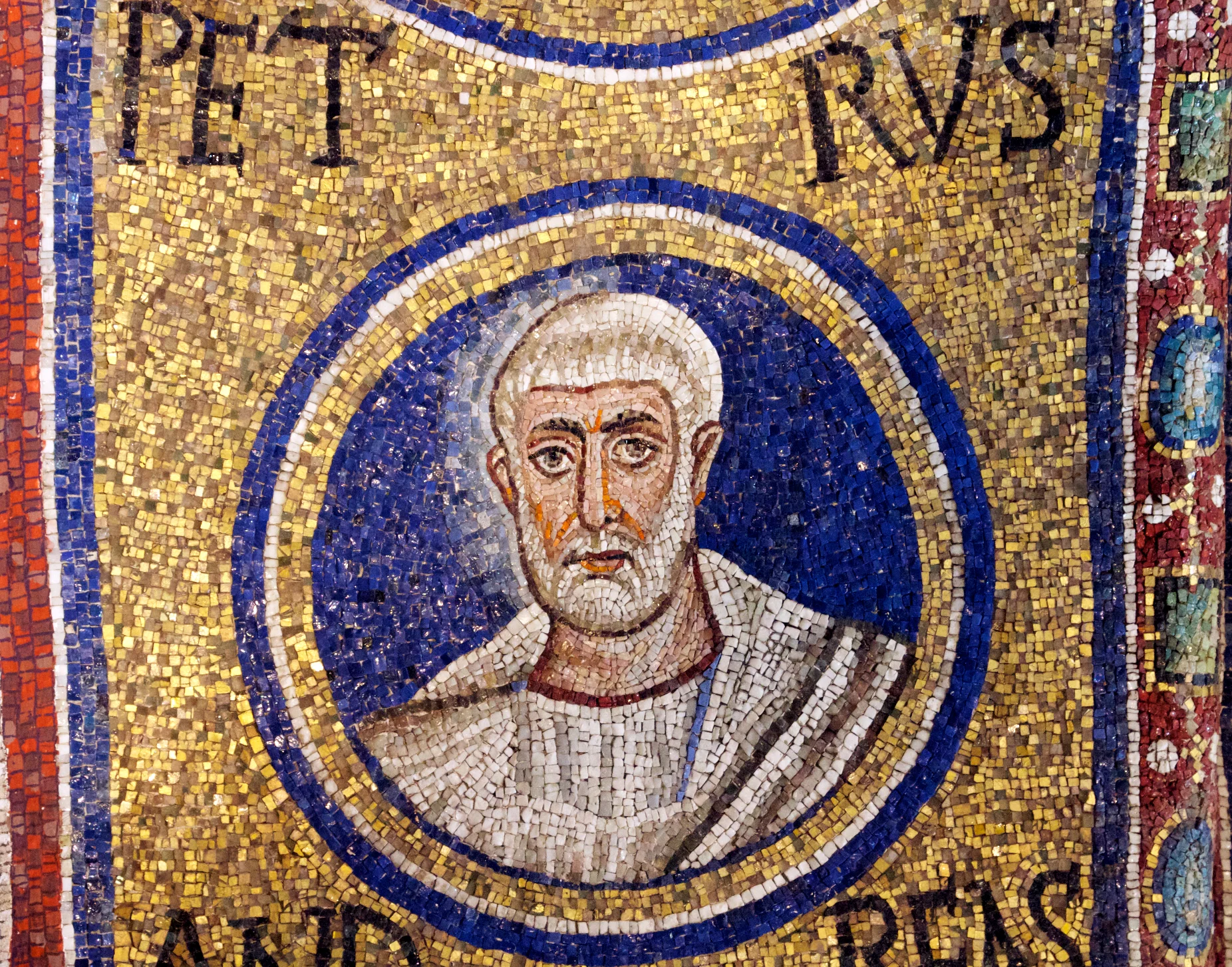
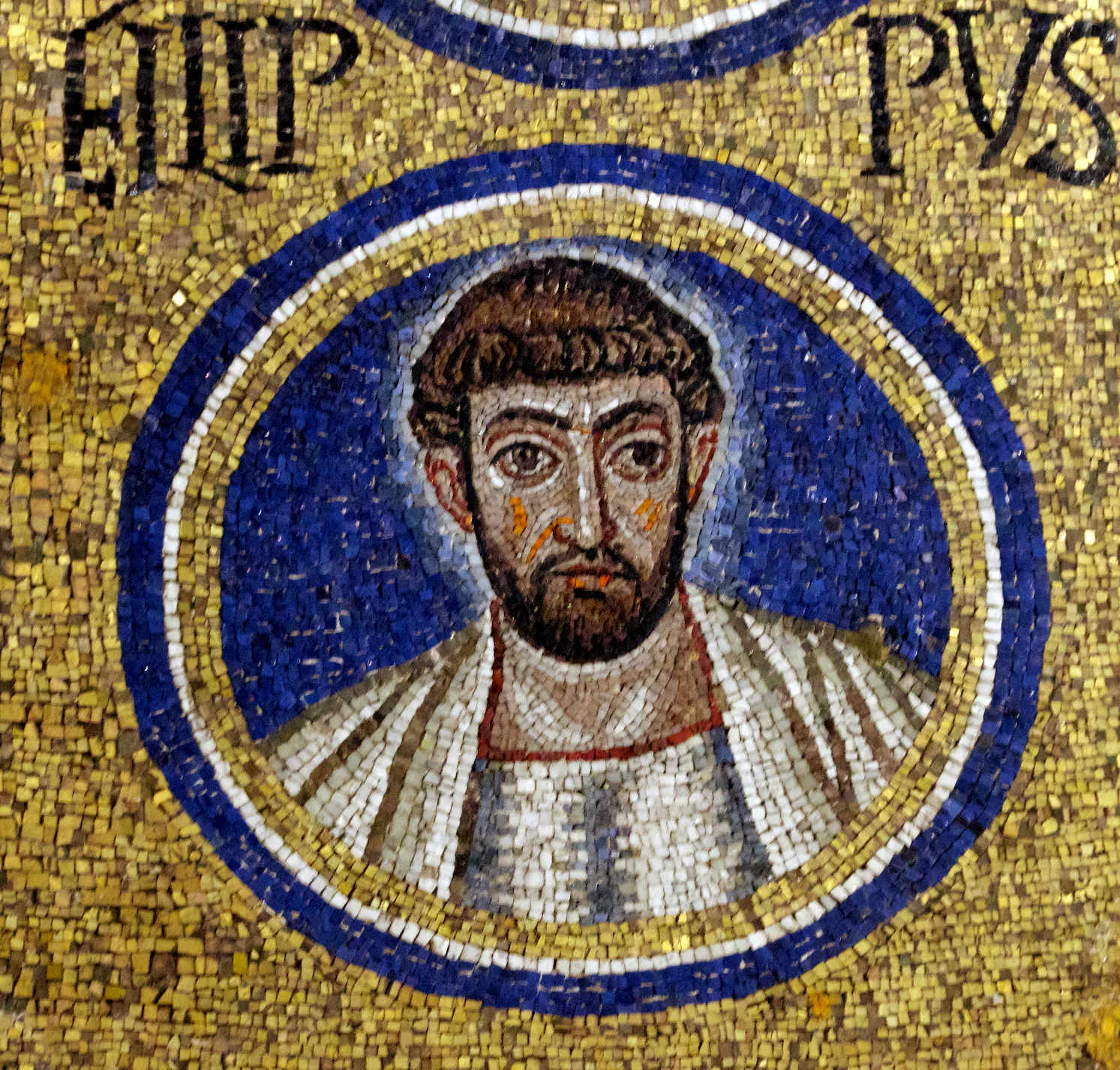
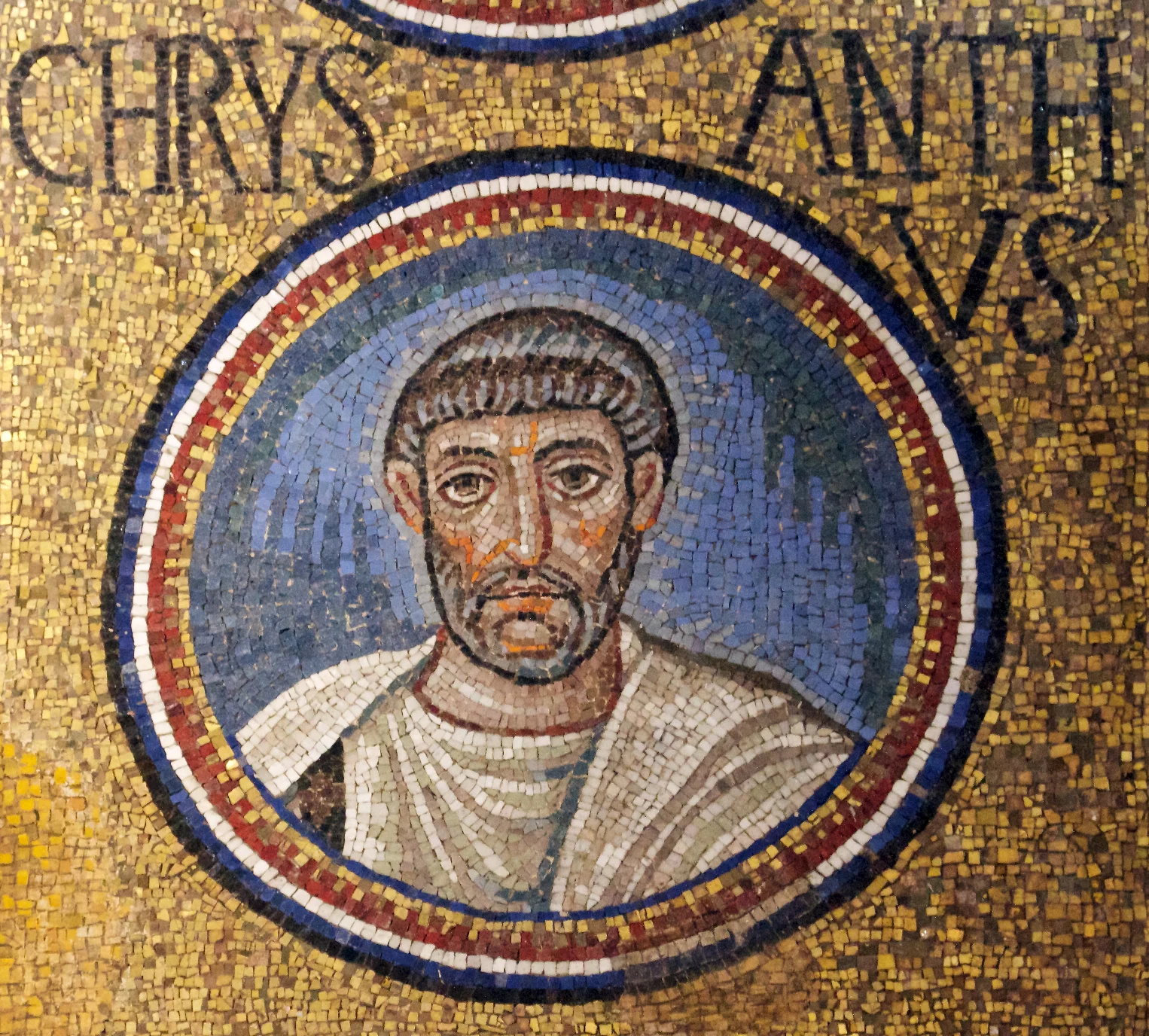
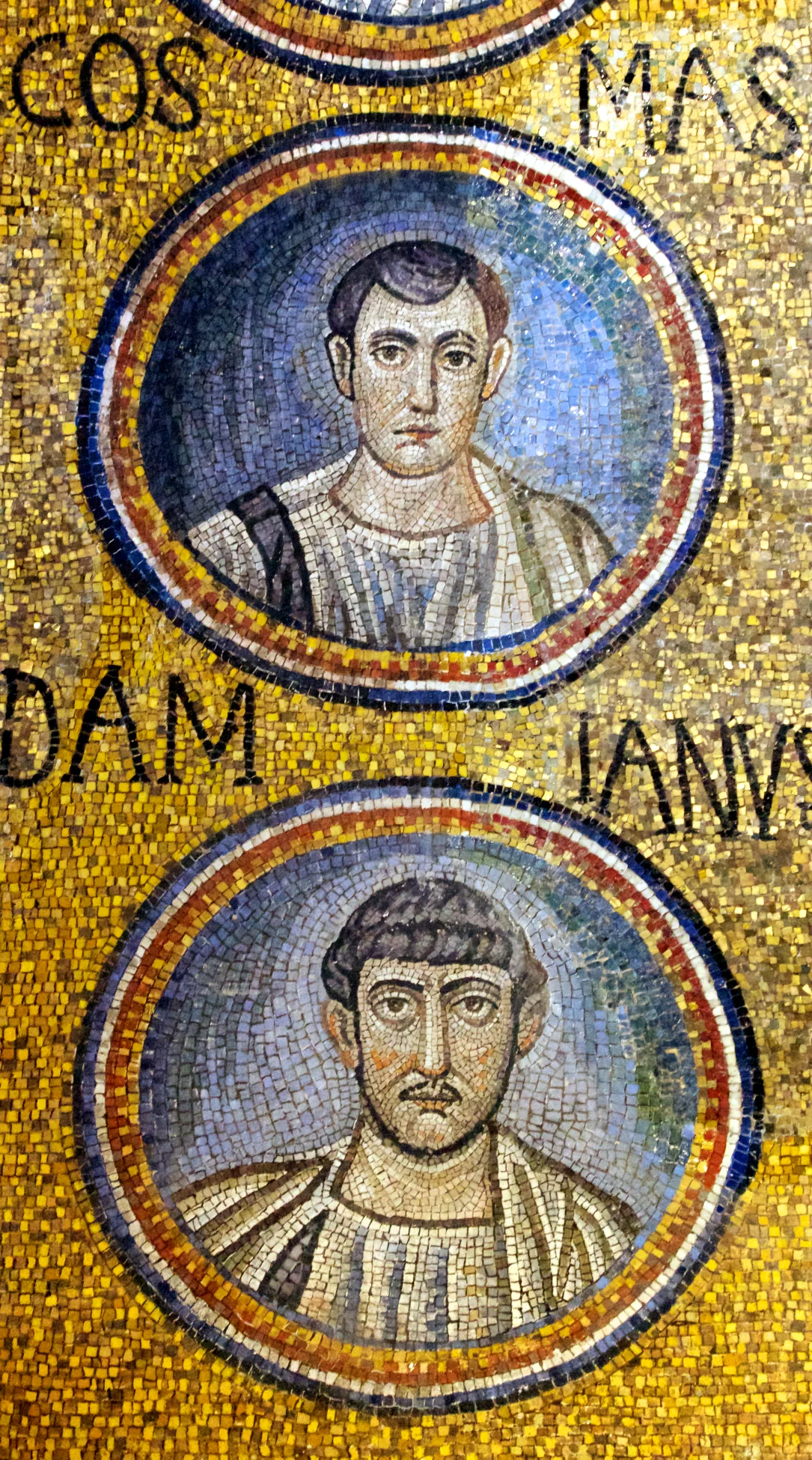
Images within medallions of the head-and-shoulders of apostles and martyrs, without haloes and set against blue backgrounds. The male saints all wear a white tunic and a white cloak (himation or pallium) draped over one or both shoulders; the women wear elaborate court dress, with the single exception of Felicitas, who is shown in plain black clothing. This presumably reflects the fact that in life she was a slave; she is, however, not differentiated in this way in the roughly contemporary representations of her in Sant'Apollinare Nuovo and at Poreč.
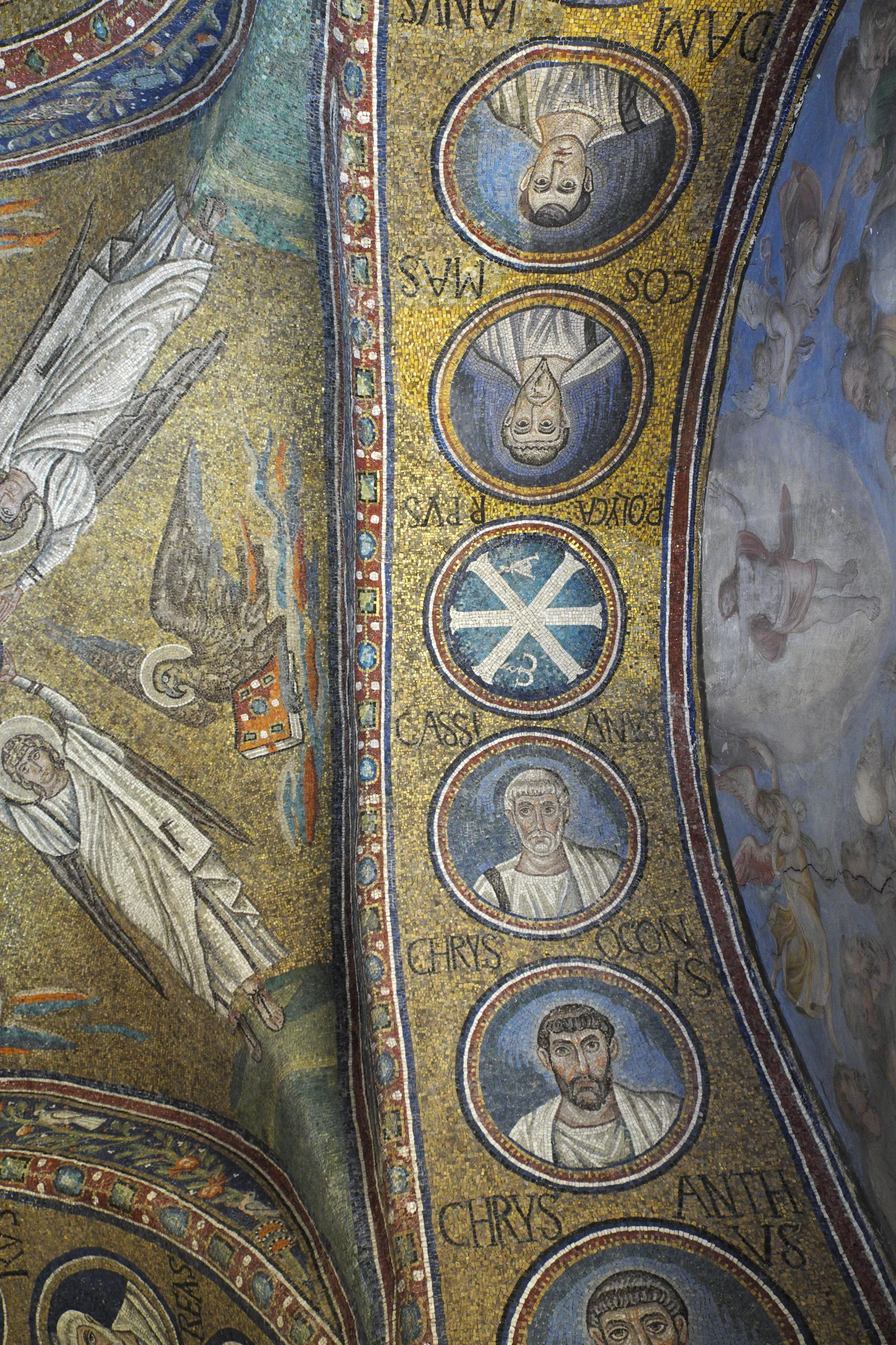
The images are presented on the barrel vaults that constitute the four crossings of this small cruciform chapel, in a single row of six saints at the entrance to each crossing. The image of each saint is labelled, and they are as follows (here listed in each vault from bottom left to bottom right):
North-east (Apostles)
IOHA NNIS (*John, the Apostle and Evangelist, S00042)
IACO BVS (*James, the Apostle, son of Alphaeus, S01801, or the son of Zebedee, S00108)
PAV LVS (*Paul, the Apostle, S00008)
Beardless Christ
PET RVS (*Peter the Apostle, S00036)
AND REAS (*Andrew, the Apostle, S00288)
FILIP PVS (*Philip, the Apostle, S00109)
South-east (Male Martyrs)
CHRYS ANTHVS (*Chrysanthus, husband of Daria and martyr of Rome, S00306)
CHRYS OCONVS (*Chrysogonus, martyr of Aquileia venerated in Rome, S00911)
CASSI ANVS (*Cassianus, teacher and martyr of Imola, S00309)
(Christogram)
POLYCA RPVS (*Polycarp, bishop and martyr of Smyrna, S00004)
COS MAS (*Cosmas/Kosmas, brother of Damianos, physician martyr of Syria, S00385)
DAM IANVS (*Damianos, brother of Kosmas, physician martyr of Syria, S00385)
South-west (Apostles)
SIMONCA NANEVS (*Simon Kananaios, the Zealot, Apostle of Christ, S00835)
TAD DAEVS (*Jude Thaddeus, Apostle, one of the Twelve, S00792)
IACO BVS (*James, the Apostle, son of Alphaeus, S01801, or the son of Zebedee, S00108)
(Beardless Christ)
THO MAS (*Thomas, the Apostle, S00199)
MAT THEVS (*Matthew, the Apostle and Evangelist, S00791)
BARTH OLOMEVS (*Bartholomew, the Apostle, S00256)
North-west (Female Martyrs)
CECI LIA (*Caecilia, virgin and martyr of Rome, S00146)
EVGE NIA (*Eugenia, martyr of Rome, S00401)
EVFI MIA (*Euphemia, martyr of Chalcedon, S00017)
(Christogram)
DA RIA (*Daria, wife of Chrysanthus and martyr of Rome, S00306)
PERPE TVA (*Perpetua, martyr of Carthage, S00009)
FELICI TAS (*Felicitas, martyr of Carthage, S00009)
Description: Frances Trzeciak.
Source
These mosaics adorn the vaults of the Cappella Arcivescovile, where they are still visible today, essentially in their original form. The historian Agnellus, writing in 830/846, provides an account of the chapel's foundation, which he attributed to Peter II, bishop of Ravenna (494-520), on the basis of its dedicatory inscription (now lost). See E05772.
Discussion
This is a varied selection of martyrs. It is possible they were chosen because their relics were held in the chapel. Yet it is much more likely they were simply martyrs popular in Ravenna and Italy in the early 6th century. Euphemia had become a symbol of Chalcedonian orthodoxy, while Polycarp (also from Asia Minor) was well-known from his early Martyrdom, and a major church to Cosmas and Damian was built in Rome in the 520s by Felix IV (E01361). Chrysogonus, Perpetua, Felicitas and Caecilia were all popular across Italy. Cassianus was the local saint of nearby Imola. Eugenia, Daria and Chrysanthus all have attested veneration in Rome.
The male saints are varied in their beards and hairstyles; there is much less variation among the female saints. However, by contrast with the representations of female saints in Sant' Apollinare Nuovo (for which see E06046) and with those at Poreč (ancient Parentium) on Istria (for which see E08565), two of the women are distinguished from the others: Daria, as a mature matron, does not wear the diadem in her hair borne by her more youthful companions (her husband, Chrysanthus, is similarly portrayed as mature), and Felicitas, as a slave, also has no diadem and is dressed in dowdy black.
Similar portraits of martyrs in medallions were once to be found in Santa Sabina in Rome from the 420s (Deliyannis, 194).
Bibliography
Further Reading:
Deichmann, F.W., Ravenna, Hauptstadt des spätantiken Abendlandes, 3 vols (Wiesbaden, 1958-89).
Deliyannis, D.M., Ravenna in Late Antiquity (Cambridge, 2010).
Jäggi, C., Ravenna: Kunst und Kultur einer spätantiken Residenzstadt; die Bauten und Mosaiken des 5. und 6. Jahrhunderts (Regensburg, 2016).
Verhoeven, M., The Early Christian Monuments of Ravenna: Transformations and Memory (Turnhout, 2011).
Images
Associated saints
Cult classifications
- Cult Places
- Cult building - dependent (chapel, baptistery, etc.)
- Religious Grouping
- Explicitly Chalcedonian
- Use of Images
- Commissioning/producing an image; Public display of an image
Record author
Frances Trzeciak
Entry date
30/07/2018
Citation
Frances Trzeciak, Cult of Saints, E05950 — https://csla.history.ox.ac.uk/record.php?recid=E05950