
E06047
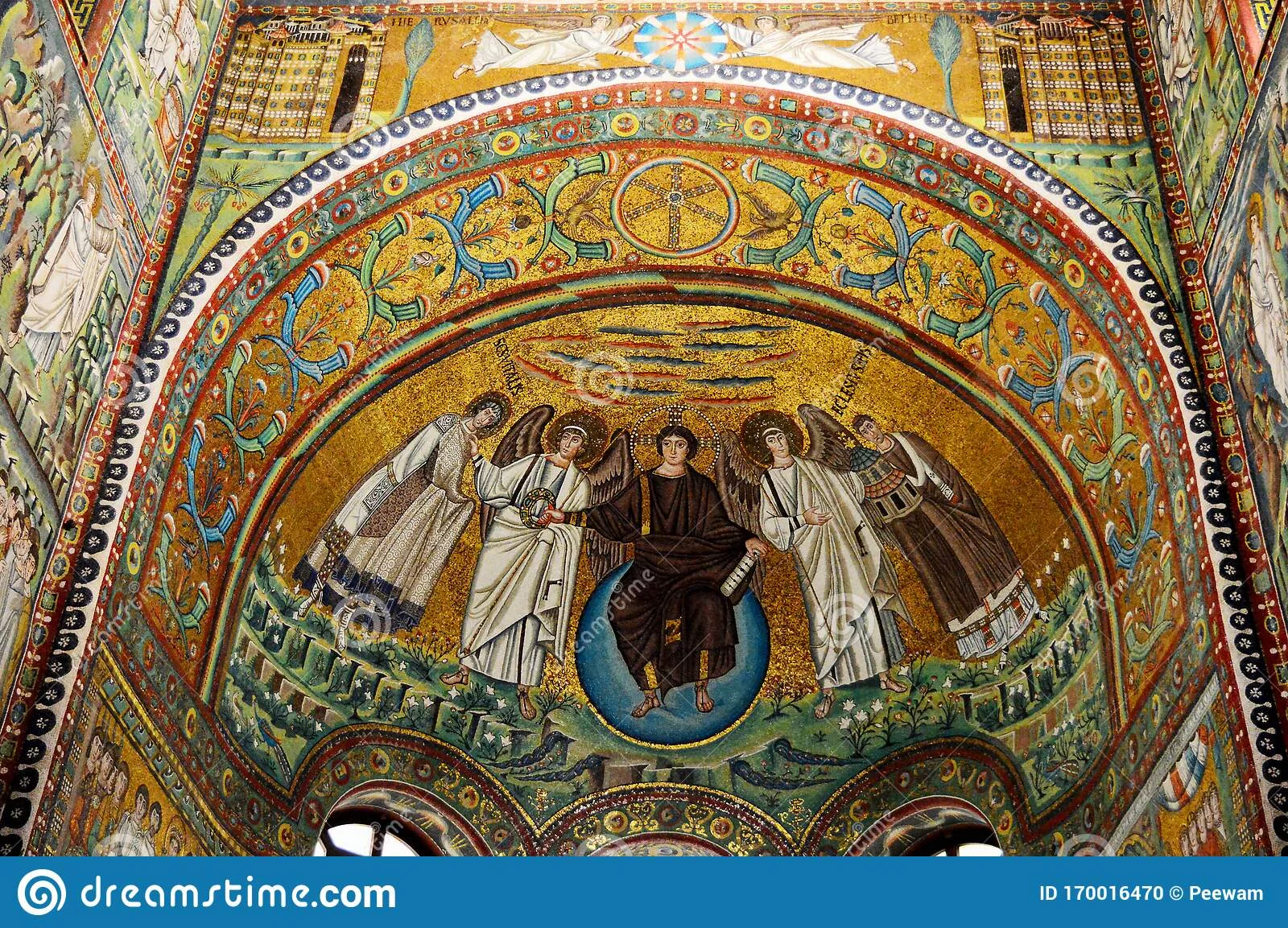
Mosaics in San Vitale, Ravenna (northern Italy), depicting *Vitalis (soldier and martyr of Ravenna, S02826), and busts of the *Apostles and *Gervasius and Protasius (brothers and martyrs of Milan, S00313); created c. 549.
- Language
- Latin
- Date from
- 500
- Date to
- 530
- Evidence type
- Images and objects; Inscriptions
- Evidence subtype
- Inscribed architectural elements; Wall paintings and mosaics
- Evidence region
- Italy north of Rome with Corsica and Sardinia
- Evidence location
- Ravenna; Sardinia, Sardinia, Sardegna, Sardinia
- Cult region
- Italy north of Rome with Corsica and Sardinia
- Cult location
- Ravenna; Sardinia, Sardinia, Sardegna, Sardinia
- Cult date from
- 500
- Cult date to
- 530
Text
Mosaics in San Vitale, Ravenna
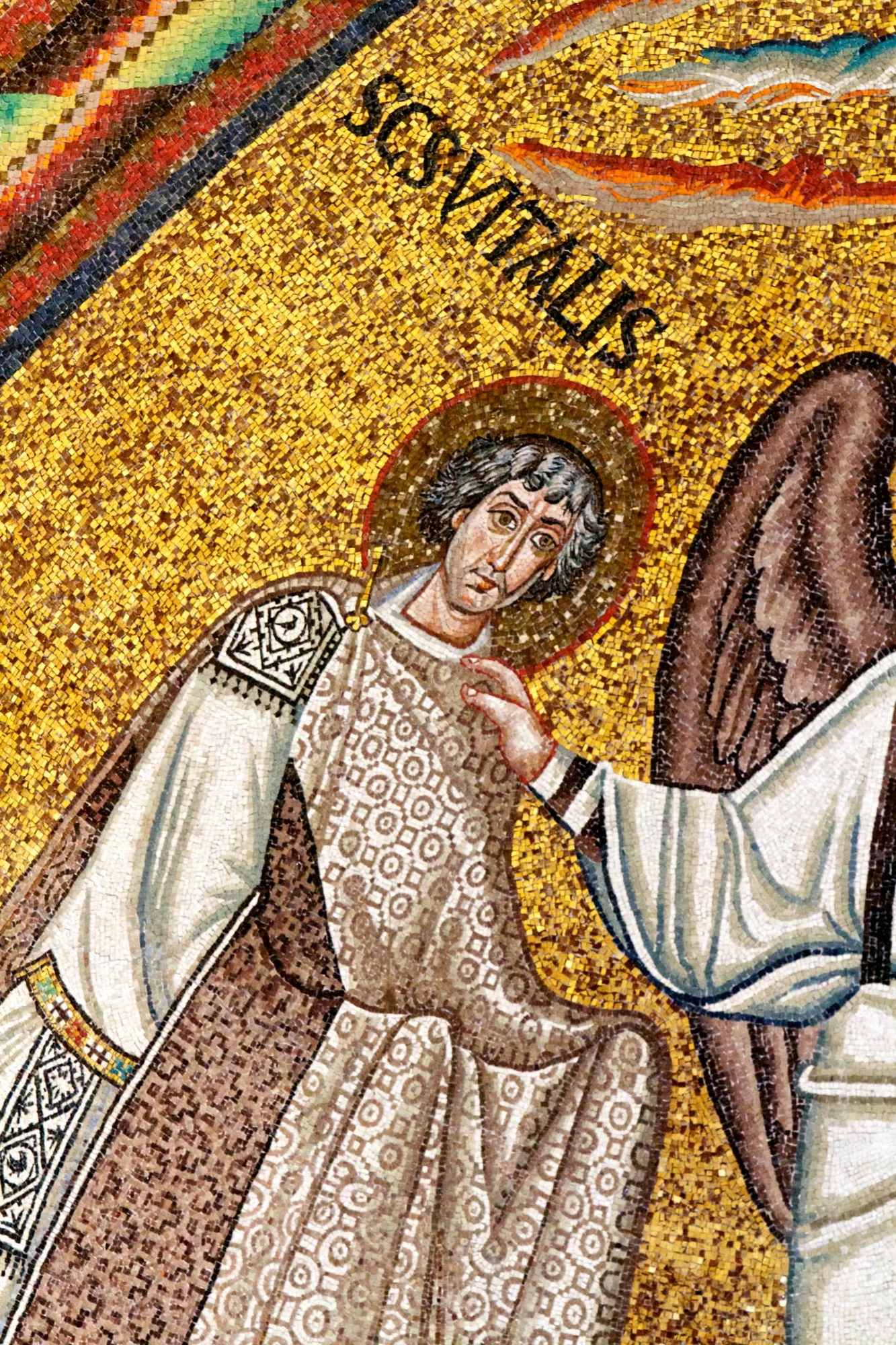
The apse mosaic depicts five full-length figures standing against a gold background. A beardless Christ sits haloed in the centre on an orb, holding out a crown to Vitalis and flanked by two angels who present the figures of Vitalis and Ecclesius. On the far right, Ecclesius (bishop of Ravenna, 522-532), the only figure represented without a halo, offers up the church to Christ. On the far left, Vitalis is represented with grey hair and dressed in short tunic and elaborately decorated chlamys (the cloak worn by those in imperial service). Labels are provided for both Ecclesius (ECCLESIVSEPIS) and Vitalis (SCSVITALIS).
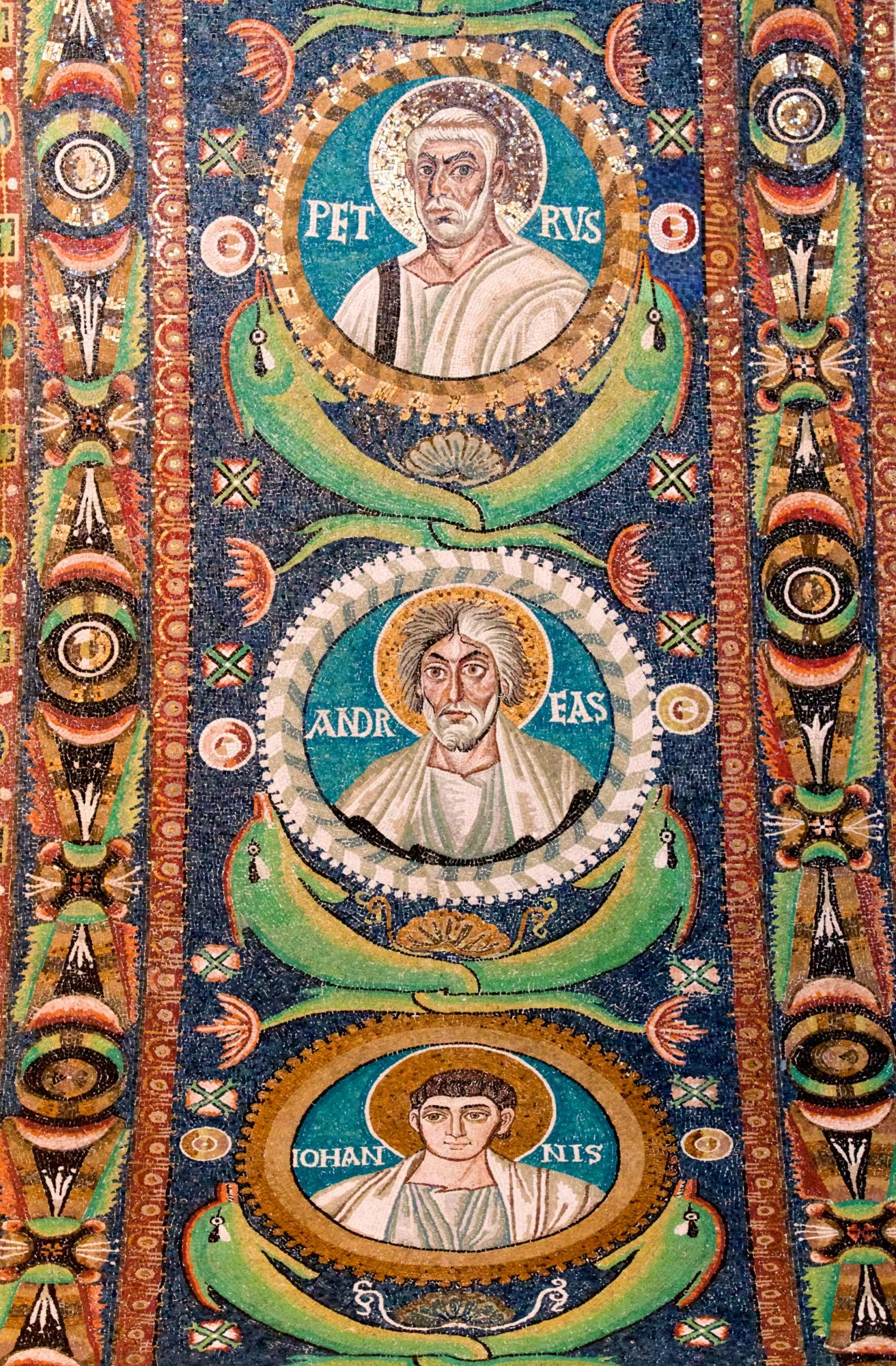
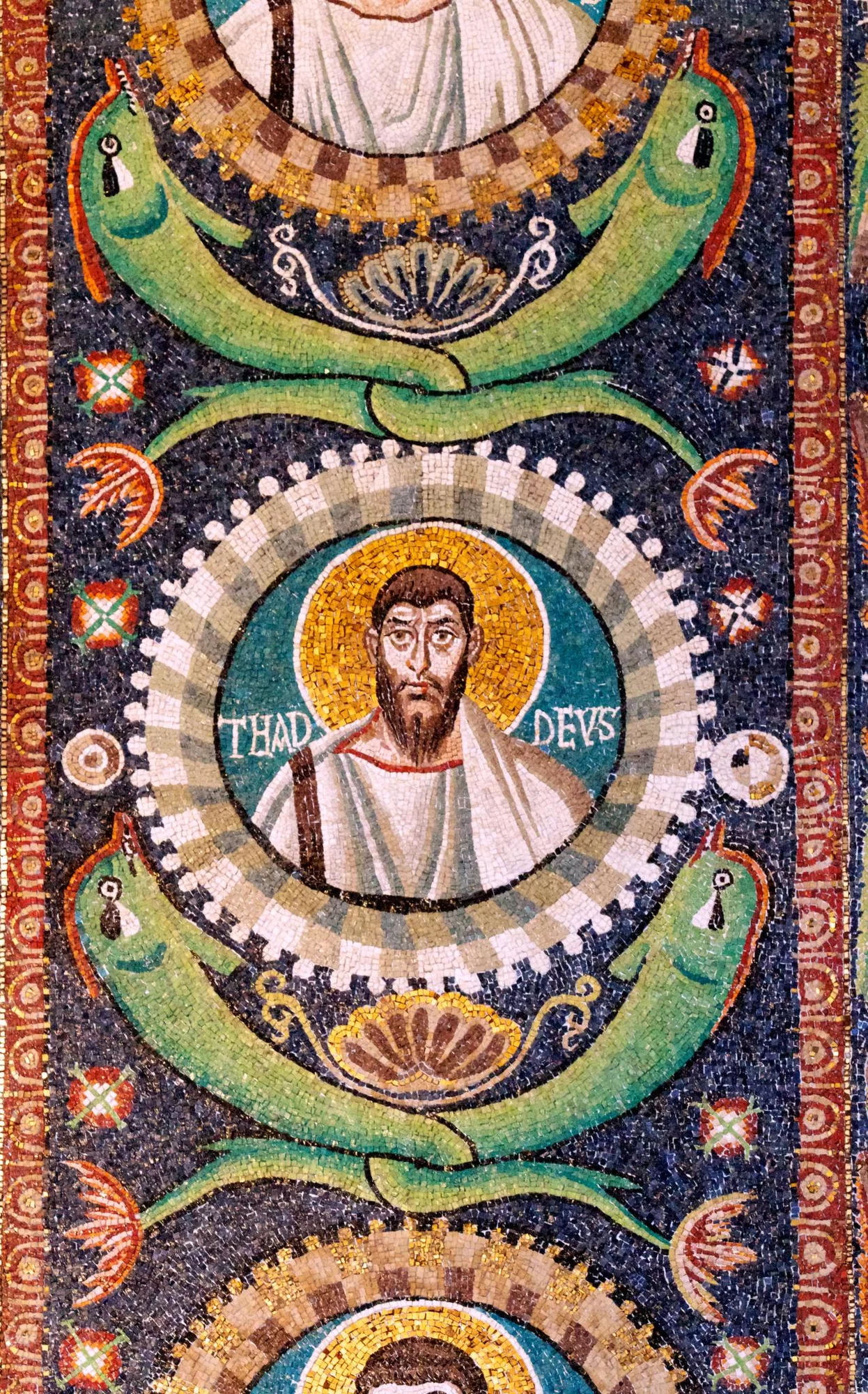
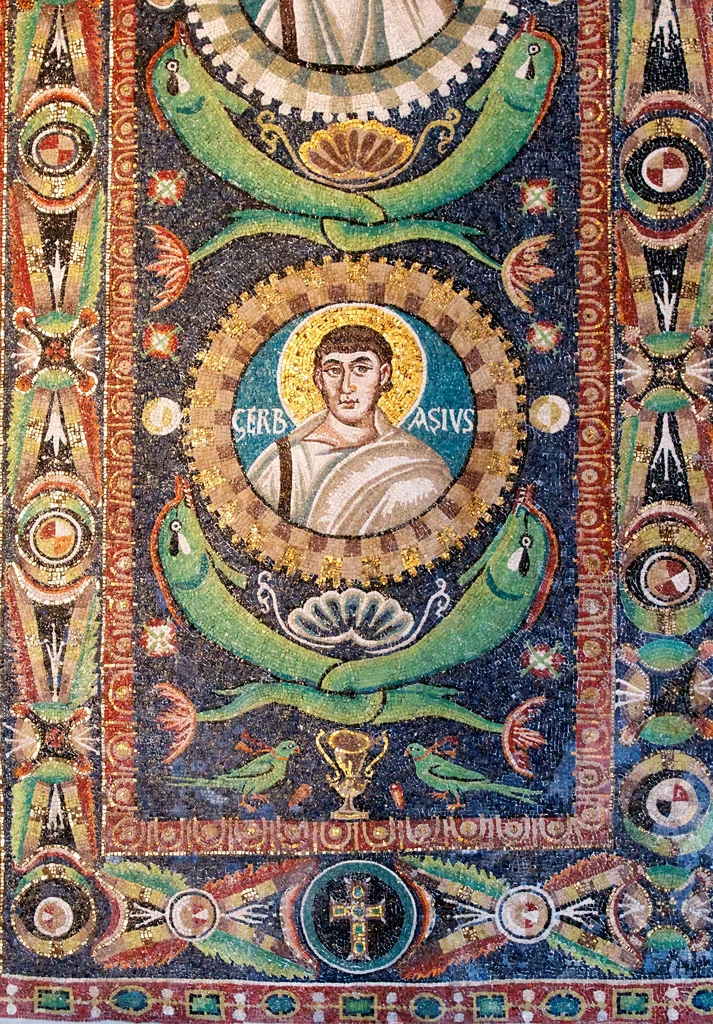
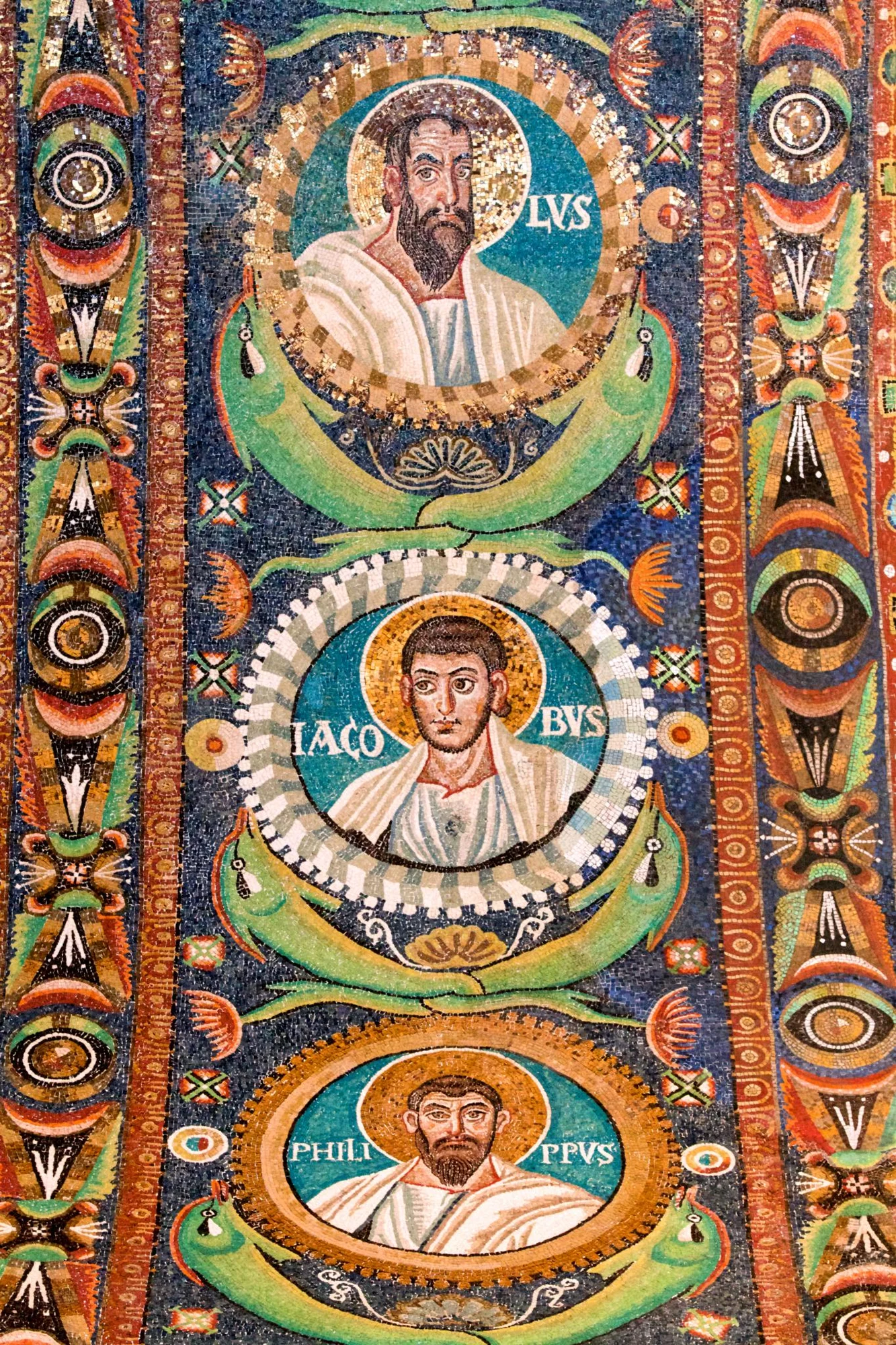
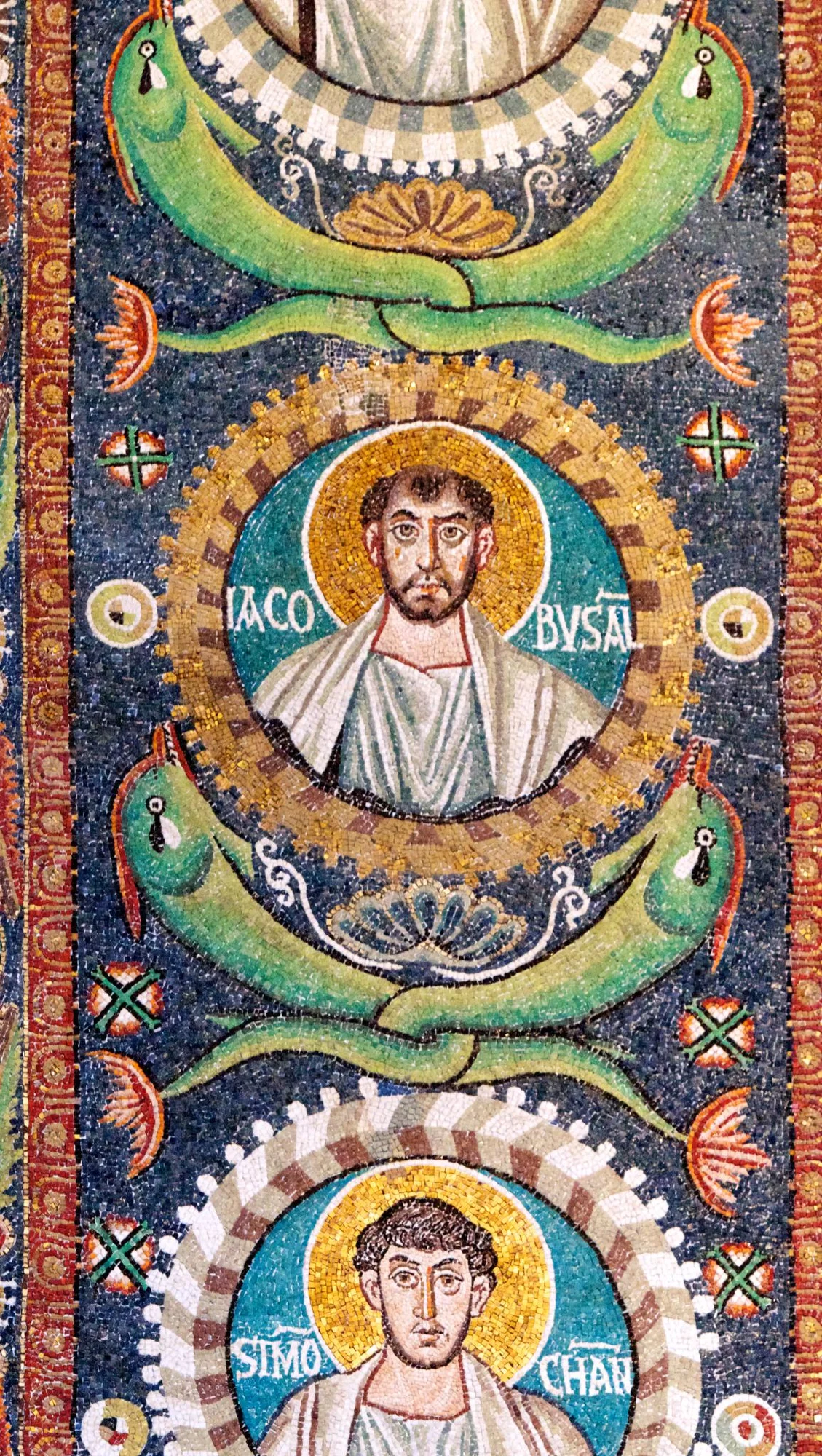
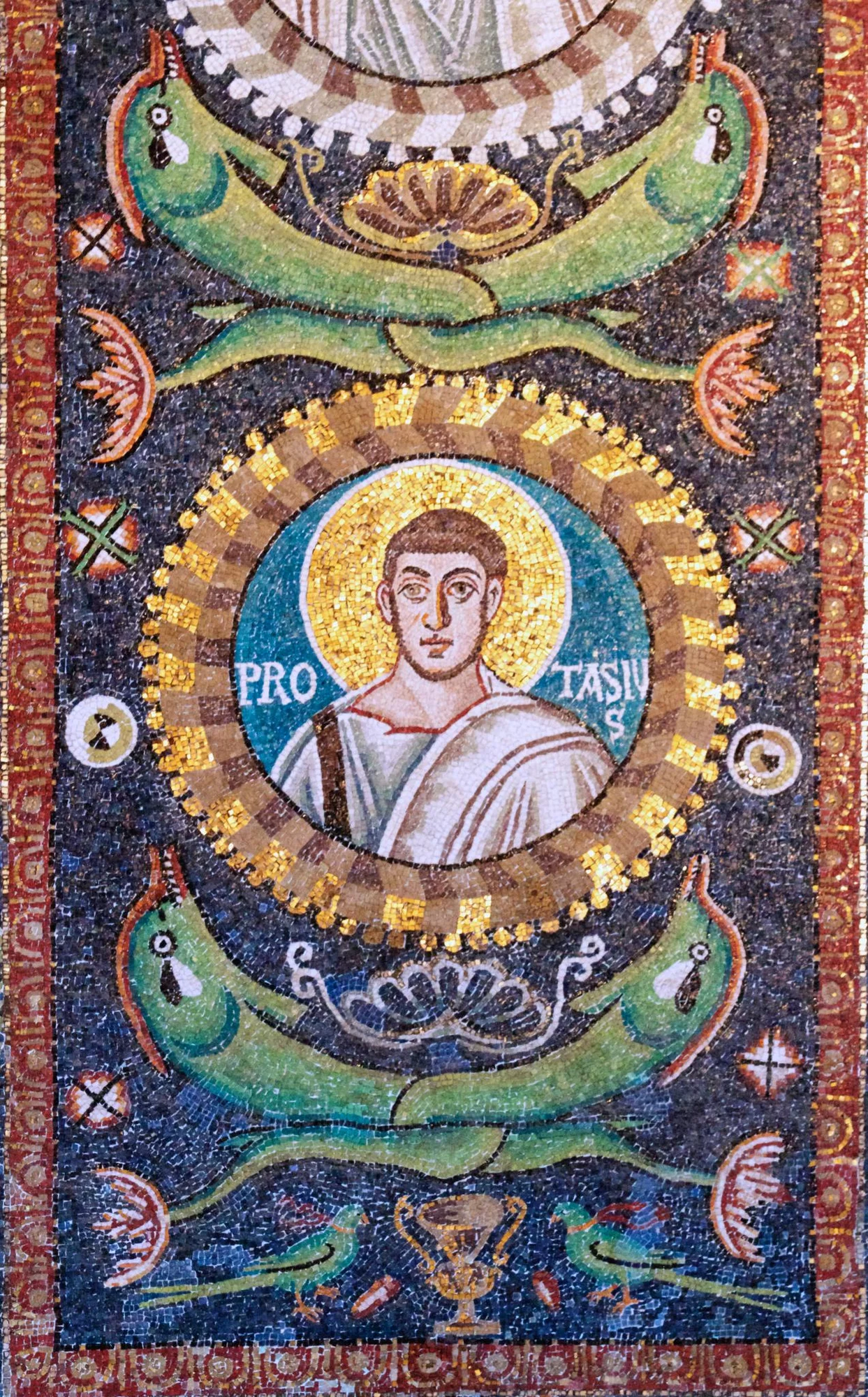
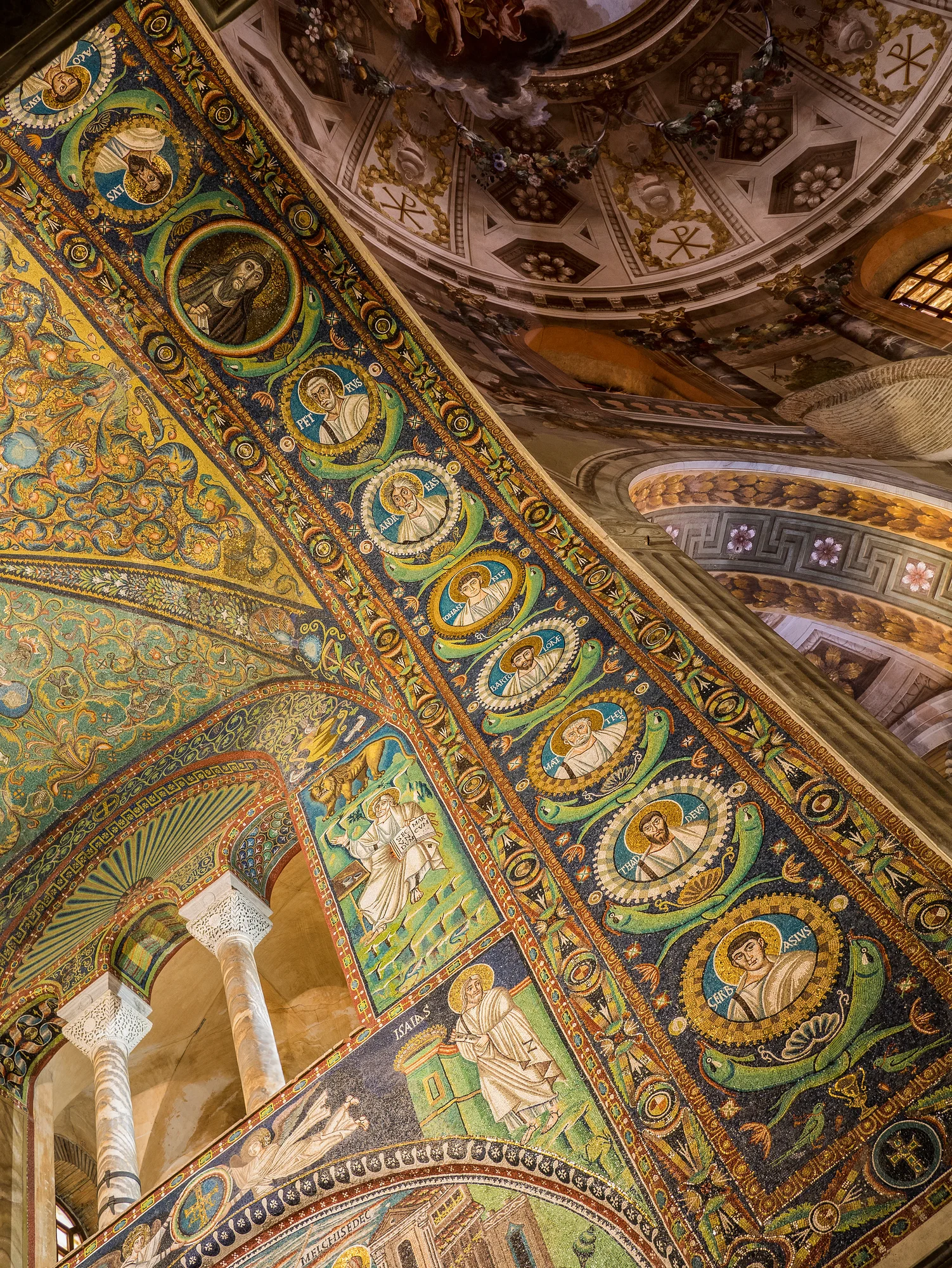
Portrait busts of twelve apostles and of Gervasius and Protasius are depicted on the underside of the triumphal arch which leads from the presbytery to the nave of the church. The portraits are depicted in highly decorated medallions and are set against a blue background. All the figures wear a tunic with vertical black stripe and a cloak (himation) draped over one shoulder. All are haloed, and labelled with their names within the medallions.
The order of the portraits is as follows (from the top of the arch to the bottom):
South:
PET RVS (*Peter, the Apostle, S00036).
ANDR EAS (*Andrew, the Apostle, S00288).
IOHAN NIS (*John, the Apostle and Evangelist, S00042).
BARTO LOMĒ (*Bartholomew, the Apostle, S00256).
MAT THEV S (*Matthew, the Apostle and Evangelist, S00791).
THAD DEVS (*Jude Thaddaeus, Apostle, S00792).
GERB ASIUS (*Gervasius, martyr of Milan and brother of Protasius, S00313).
North:
[PAV] LVS (*Paul, the Apostle, S00008).
IACO BVS (*James, the Apostle, son of Zebedee, S00108).
PHILI PPVS (*Philip, the Apostle, S00109).
THO MAS (*Thomas, the Apostle, S00199).
IACO BVSA̅L̅ (*James, the Apostle, son of Alphaeus, S01801).
SIM̅O̅ C̅H̅A̅N̅ (*Simon Kananaios, the Zealot, the Apostle, S00835).
PRO TASIV S (*Protasius, martyr of Milan and brother of Gervasius, S00313).
Description: Frances Trzeciak.
Source
These mosaics are present in San Vitale today. They have been restored – along with several other late antique mosaics in Ravenna – to reflect their late antique form, but are essentially well preserved.
Agnellus of Ravenna, writing in 830/846, quotes an inscription from 549 which refers to the foundation of the church under Bishop Ecclesius and its consecration under Bishop Maximian. This inscription is now lost. See E05787.
Discussion
The representation of Vitalis as an ageing man is interesting. It is unquestionably a reference to a legend, associated with Ravenna, which claimed he was the father of the famous Milanese martyrs Gervasius and Protasius. Indeed, the inclusion of Gervasius and Protasius with the apostles, and their representation as young men, makes similar reference to this legend. See E06046 and E02498.
Bibliography
Further Reading:
Deichmann, F.W., Ravenna, Hauptstadt des spätantiken Abendlandes, 3 vols (Wiesbaden, 1958-89).
Deliyannis, D.M., "Ecclesius of Ravenna as Donor in Text and Image," in: S. Danielson and E. Gatti (eds.), Envisioning the Bishop: Images and the Episcopacy in the Middle Ages (Turnhout, 2014), 41-62.
Deliyannis, D.M., Ravenna in Late Antiquity (Cambridge, 2010).
Jäggi, C., Ravenna: Kunst und Kultur einer spätantiken Residenzstadt; die Bauten und Mosaiken des 5. und 6. Jahrhunderts (Regensburg, 2016).
Verhoeven, M., The Early Christian Monuments of Ravenna: Transformations and Memory (Turnhout, 2011).
Images
Associated saints
| Saint | Name in source | Certainty |
|---|---|---|
| Peter, the Apostle (S00036) | Petrvs | Certain |
| Paul, the Apostle (S00008) | [Paul]us | Certain |
| Andrew, the Apostle (S00288) | Andreas | Certain |
| John, the Apostle and Evangelist (S00042) | Iohannis | Certain |
| Bartholomew, the Apostle (S00256) | Bartholemew | Certain |
| Matthew, Apostle and Evangelist (S00791) | Mattevs | Certain |
| Jude Thaddaeus, Apostle, one of the Twelve (S00792) | Thaddevs | Certain |
| James, the Apostle, son of Alphaeus (S01801) | Iacobvs Al[pheus] | Certain |
| Gervasius and Protasius, brothers and martyrs of Milan (S00313) | Protasivs, Gerbasivs | Certain |
| Philip, the Apostle (S00109) | Philippvs | Certain |
| Thomas, the Apostle (S00199) | Thomas | Certain |
| James, the Apostle, son of Zebedee (S00108) | Iacobvs | Certain |
| Simon Kananaios, the Zealot, apostle of Christ (S00835) | Simo[n] Chan[aneus] | Certain |
| Vitalis, soldier and martyr of Ravenna (S02826) | Certain |
Cult classifications
- Cult Places
- Cult building - independent (church)
- Religious Grouping
- Explicitly Chalcedonian
- Use of Images
- Commissioning/producing an image; Public display of an image
Record author
Frances Trzeciak
Entry date
30/07/2018
Citation
Frances Trzeciak, Cult of Saints, E06047 — https://csla.history.ox.ac.uk/record.php?recid=E06047