
E08150
Apse mosaic of the church of SS. Cosma e Damiano in Rome, showing the Apostles *Peter and *Paul (S00036 and S00008) presenting to Christ *Cosmas/Kosmas and Damian (brothers, physicians and martyrs of Syria, S00385), behind whom are *Theodore (soldier and martyr of Amaseia and Euchaita, S00480) and Felix IV (bishop of Rome 526-530), offering a model of the church. Below this scene is a row of 12 sheep, reresenting the apostles, and a mosaic inscription recording Felix's dedication of the church. All set up in 526/530.
- Language
- Latin
- Date from
- 526
- Date to
- 530
- Evidence type
- Archaeological and architectural; Inscriptions
- Evidence subtype
- Cult buildings (churches, mausolea); Formal inscriptions (stone, mosaic, etc.)
- Evidence region
- Rome and region
- Evidence location
- ; Rome, Rome, Roma, Ῥώμη, Rhōmē
- Cult region
- Rome and region
- Cult location
- ; Rome, Rome, Roma, Ῥώμη, Rhōmē
- Cult date from
- 526
- Cult date to
- 530
Text
Brandenburg, Ancient Churches of Rome, 222–224.
Krautheimer, CBCR I, 137–143.
Recorded in the Liber Pontificalis, see E01361.
LP, 279–280: inscription, comments
Source
Donation of the building by Theoderic and Amalasunta??? Pawel says.
Bibliography
ILCV 784 [EDB 42859
Images
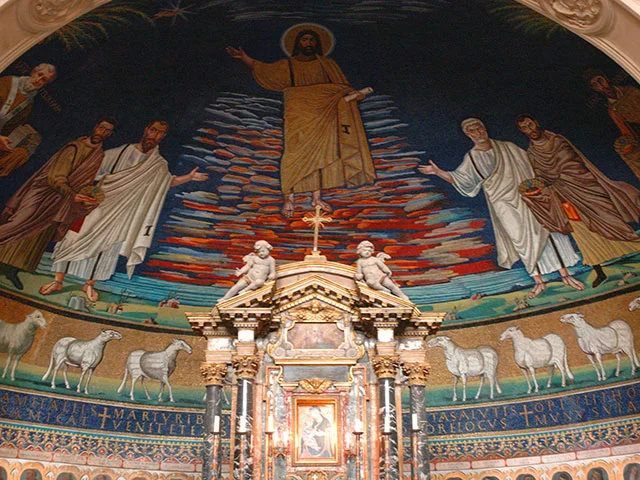
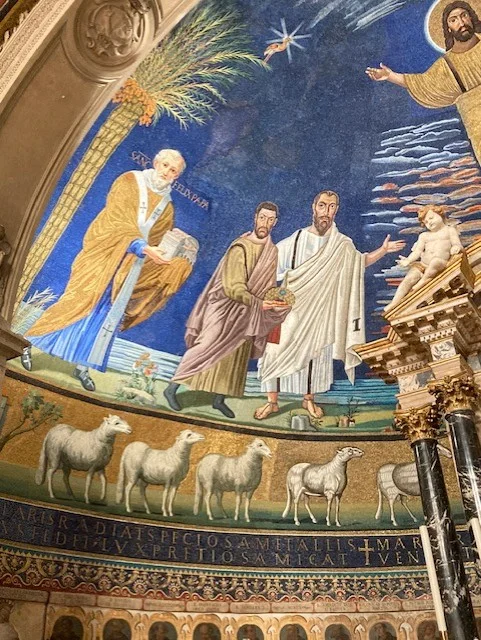
Photo: Bryan Ward-Perkins
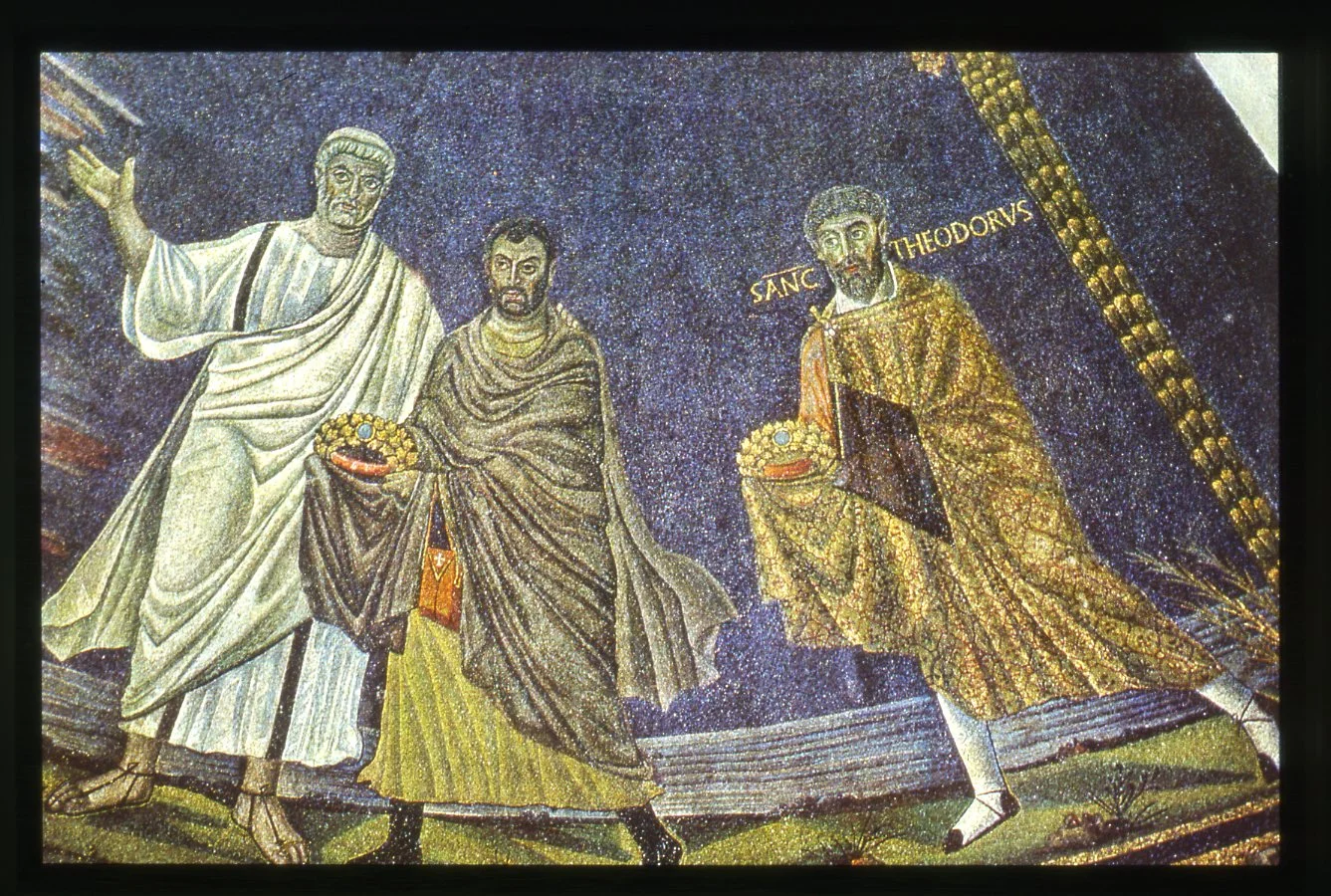
Photo: Bryan Ward-Perkins
Associated saints
| Saint | Name in source | Certainty |
|---|---|---|
| Peter, the Apostle (S00036) | Certain | |
| Paul, the Apostle (S00008) | Certain | |
| Theodore, soldier and martyr of Amaseia and Euchaita (S00480) | Certain | |
| Kosmas and Damianos, brothers, physician martyrs of Syria (S00385) | Certain |
Cult classifications
- Cult Places
- Cult building - independent (church)
- Non Liturgical Activity
- Bequests, donations, gifts and offerings
Record author
philip
Citation
philip, Cult of Saints, E08150 — https://csla.history.ox.ac.uk/record.php?recid=E08150